
REVIEW · PRAIA & CIDADE VELHA
Tour Old City/Discover Old Town
Old stone, big stories, careful pacing. This guided Old Town tour in Cidade Velha traces Santiago’s Portuguese-era beginnings tied to the old city of Ribeira Grande. You also get private transportation, so you spend more time seeing and less time figuring out logistics.
I love the way the route connects major landmarks to the big, uncomfortable story of how power worked here, from fortifications to public punishment. I also like the well-paced nature of the visit, and how guides like Nelson tend to keep things moving with warmth, humor, and practical suggestions like where to grab lunch after the walk.
One thing to consider is timing. The experience is listed as about 2 to 3 hours, and if you’re expecting a much longer outing, you may find you finish early and want to plan your next stop on your own.
In This Review
- Key highlights you should care about
- Cidade Velha Old Town: why this is more than a quick photo stop
- How the Fortaleza Real de San Felipe tells the Portuguese story after Drake
- Se Catedral: ruins that still mark the start of Portuguese church building
- Igreja Nossa Senhora do Rosário: 1495 origins and Father António Vieira in 1652
- Pelourinho in the main square: why a column is about power and punishment
- Convento de São Francisco: crafts taught, then destroyed by privateers and storms
- The walking pace, comfort, and what the ride feels like
- Price and value: what $29.60 buys you (and what it doesn’t)
- When this tour works best for you
- Practical tips so your visit feels smoother
- Should you book this Old City / Old Town outing?
- FAQ
- How long is the Old City / Old Town experience?
- Is pickup included?
- Are admission tickets included?
- Is this a private tour?
- Do I need good weather for the tour?
- What is the cancellation policy?
- Are mobile tickets and service animals allowed?
Key highlights you should care about
- Portuguese-era landmarks across one compact Old Town area, including a UNESCO World Heritage historic center
- Fortaleza Real de San Felipe, built after the 1585 Drake attack, with a fort-to-city story that adds context to the stones
- Most stops are free, with only one major site showing an admission ticket not included
- A guide who can set a comfortable pace, with Nelson specifically noted for being warm and helpful
- Pickup plus a mobile ticket, which makes it easier to start your day without extra admin
- Private group only, so you are not packed into a big crowd
Cidade Velha Old Town: why this is more than a quick photo stop
Cidade Velha, the historic center tied to the old city name Ribeira Grande, matters because it sits at the start of many Cape Verde stories. It’s linked to Portuguese presence in the region and to the long centuries when this coast mattered to trade routes between Africa, Europe, the Americas, and beyond. That is why even when you’re looking at ruins, you’re really reading a timeline in stone.
This tour gives you a guided path through the key places that shaped the city, including religious sites, civic symbols, and military remains. You’ll see how power and faith shaped daily life, then how those same structures became shadows of themselves over time.
And because this is priced as a private experience with transportation included, you’re not left juggling buses, taxis, and walking directions. You’re set up to get your bearings fast, then focus on what you’re seeing.
How the Fortaleza Real de San Felipe tells the Portuguese story after Drake
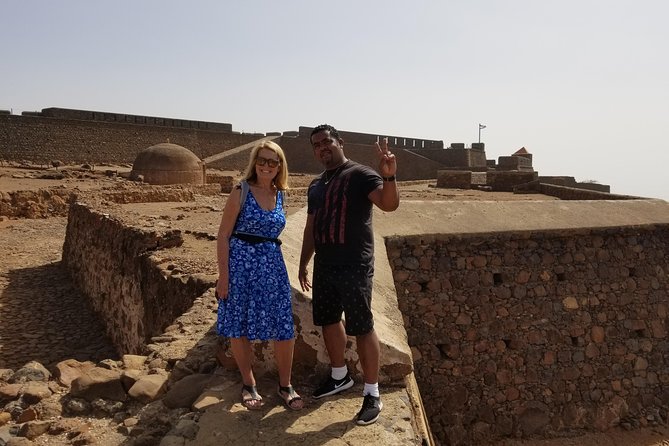
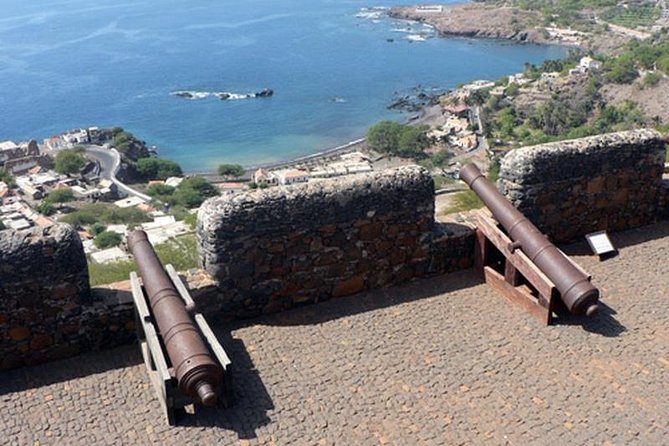
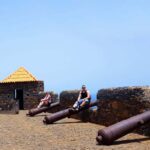
Fortaleza Real de San Felipe is where the tour’s tone turns from general history to specific, dramatic events. This fortress is described as major evidence of Portuguese presence, built after the 1585 attack by Drake. Even if you’re not a map-and-math history person, the Drake connection gives you a clear reason the fort existed, and why the Portuguese needed a defensible hold.
The city was garrisoned from this fort, with construction starting around 1593. That detail helps you understand the fortress as more than a landmark. It was a working military tool, connected to controlling the city and protecting shipping interests.
A practical note: this stop lists admission ticket not included. So budget a little extra if you want entry where required, and keep a bit of flexibility in your schedule. Even when you only get partial access, the site still helps you connect the rest of the walk to a military and maritime context.
Praia and the old capital, other guided walks
- Praia & Cidade Velha: Guided City Tour★ 4.8 · 80 reviews
- Praia: Baobab Mysterious Tree, Green Valley & Old City Hike★ 4.8 · 53 reviews
- Santiago: Calabaceira Valley Trek & Visit to Cidade Velha★ 4.8 · 49 reviews
- From Praia: Boat Trip, Snorkeling, Cave & BBQ on the Beach★ 4.6 · 45 reviews
- From Praia: Cidade Velha, Tarrafal & East Side Island Tour★ 4.8 · 23 reviews
Se Catedral: ruins that still mark the start of Portuguese church building
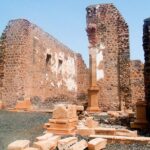
Next comes Se Catedral, the ruined cathedral connected to an important claim in the tour description: it is presented as the first Portuguese church erected on the black continent. Today, you’re looking at what remains, but the tour framing is useful. It explains why preservation matters, since references can vanish when they’re left to weather alone.
Even if a cathedral ruin doesn’t sound like a “wow” stop at first, this is the kind of place where guidance changes everything. A good guide helps you see why ruins still tell you who built what, and why. In this case, the story ties Ribeira Grande to commerce and to the city’s rise in projection, which is part of why the Portuguese church project took shape.
This stop also lists admission free, which makes it easy to include even if you want a slower moment to take photos and just absorb the atmosphere.
Igreja Nossa Senhora do Rosário: 1495 origins and Father António Vieira in 1652
The Church of Our Lady of the Rosary is described as one of the oldest temples on Santiago and in Cape Verde, built around 1495. That timeline alone is a reason to pay attention. You’re not just visiting a church. You’re visiting a building that predates many later colonial structures by centuries, even if today’s experience is shaped by what time has left.
The tour adds a standout cultural detail: Father António Vieira preached here in 1652 while he traveled from Portugal to Brazil. That gives you a human thread through the stone. Rather than seeing the church as a static monument, you can imagine it functioning as a gathering place where ideas traveled along with people and ships.
This stop is also admission free. So if you’re trying to keep costs controlled while still packing in meaningful sights, it fits well.
Pelourinho in the main square: why a column is about power and punishment
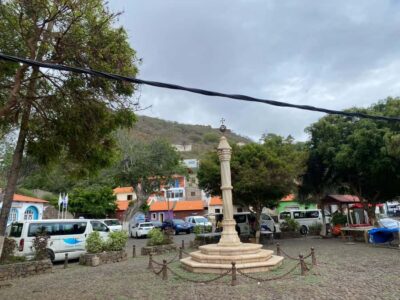
Pelourinho is one of those places that looks simple until you understand what it represents. In the Cidade Velha historic center, it’s a Manueline-style column of white marble in the main square. The Manueline detail matters because it signals Portuguese architectural influence, showing how style traveled with authority.
But the real weight here is what the tour connects the pelourinho to: municipal power and slavery. It’s described as the spot where rebel slaves were publicly punished in the pillory. That is heavy. Still, if you want your Old Town visit to feel honest, this is part of the story you can’t skip.
The tour description also adds history you can hold onto while you look at the column: it was built in 1512 or 1520, and later restored in the late 1960s. That restoration date helps you understand this monument as something actively maintained, not just left behind as a random leftover.
Like several other stops, it lists admission free, so you can spend time here without worrying about extra ticket costs.
Convento de São Francisco: crafts taught, then destroyed by privateers and storms
Convento de São Francisco brings the tour’s story closer to daily life. It’s described as constructed around 1640 on land donated by Joana Coelho, a wealthy landowner and widow of Captain Fabião de Andrade. That kind of name-driven detail does something important. It turns the convent from a generic religious stop into a story about local people and local support.
The convent is tied to the Franciscans, who replaced the Jesuits in Cape Verde. The tour description also says the site functioned as a training center where priests taught various crafts to the community. That is valuable context because it means the convent was not only for prayer. It was for skills and practical education, likely shaping how people worked and lived.
Then comes the rough part of the timeline. The convent was practically destroyed after an attack by the privateer Jacques Cassard in 1712, and again by a storm in 1754. This layered collapse explains why you may see partial remains or a site that feels like a memory of a building rather than a fully intact institution.
This stop is also admission free, so you can slow down here and linger without worrying about entry fees.
Other town wanders, Mindelo through Praia
The walking pace, comfort, and what the ride feels like
The tour runs about 2 to 3 hours. In theory, that’s perfect for a half-day mindset: you see multiple anchor points without turning your whole day into a grind. In practice, the pace can vary depending on how long you spend at each stop, how questions flow, and how the guide handles timing between sites.
One detail worth planning for is vehicle size and comfort. This experience includes private transportation, but the ride may happen in a compact car depending on the group. If you’re sensitive about tight seating, plan to travel with a smaller group, or ask the operator what vehicle to expect.
Also, because pickup is offered and the start is supported by a mobile ticket, you’ll want your phone charged. You’ll usually do better if you’re ready at the pickup time instead of scrambling with directions on the spot.
Price and value: what $29.60 buys you (and what it doesn’t)
At $29.60 per person, this is positioned as a budget-friendly way to connect the core Old Town sights into one coherent route. What you’re paying for is not just the walking. You’re paying for a guide to connect the dots between fort, cathedral ruins, churches, civic monuments, and a convent tied to craft education.
What’s included is private transportation. What is not included is all fees and taxes. Also, admission is listed as not included for Fortaleza Real de San Felipe, while other key stops are free.
So the value equation looks like this:
- If you only pay the likely admission at the one ticketed site, your total trip cost stays close to the listed price.
- If you add any extra site entries, shopping, or a paid museum experience elsewhere that you didn’t plan for, your final cost grows.
If you care about squeezing maximum value out of your time, this is a good structure: most stops are free, and the paid stop is the one that anchors the Portuguese military story.
When this tour works best for you
This tour is a good match if you want:
- A focused Old Town orientation in a short time window
- Clear connections between Portuguese influence, trade-era growth, and later decline
- A guided explanation of why specific monuments matter, especially the pelourinho
It’s also a smart choice for first-timers in Praia who want Santiago’s Old Town context without building an itinerary yourself. The private format helps because you can ask more direct questions without feeling rushed by a bus schedule.
Where it might be less satisfying is if you want a long, multi-hour deep-history experience with lots of stops or extra optional add-ons built into the plan. The structure here is meant to stay within that 2 to 3 hour frame.
Practical tips so your visit feels smoother
- Bring water and something light to cover your head. The Old Town sun can be relentless, even when you think it’s a cooler time of day.
- Wear shoes that handle uneven ground. Historic centers often have cobbles and irregular surfaces.
- At the ticketed fortress stop, plan a bit of extra time for entry logistics. If you arrive with a plan to keep moving, you’ll feel less rushed.
- Ask the guide one question per stop. It turns passive looking into understanding. Start with why a place mattered in trade, power, or education.
- If Nelson is your guide, take his lunch suggestion. A small meal plan after the walking part can make the whole day feel more complete.
Should you book this Old City / Old Town outing?
I’d book this tour if you want a short, organized way to grasp Cidade Velha’s Portuguese-era landmarks and the social story tied to them. The free admission on most stops helps the budget, and the mix of military, religious, civic, and craft education sites gives you a more complete picture than a single-spot visit.
Skip or adjust your expectations if you’re chasing a long, sprawling itinerary or if you need lots of comfort space in the vehicle. Also, if you’re hoping for extra add-on time, keep an eye on your own plan for what comes next after the walk.
If you like your history grounded in real places, and you’re ready for some heavy themes alongside the beauty of old stone, this is a solid, value-driven way to see Santiago’s Old Town in one go.
FAQ
How long is the Old City / Old Town experience?
It lasts about 2 to 3 hours.
Is pickup included?
Pickup is offered, and private transportation is included.
Are admission tickets included?
All fees and taxes are not included. Fortaleza Real de San Felipe lists admission ticket not included, while Se Catedral, Igreja Nossa Senhora do Rosário, Pelourinho, and Convento de São Francisco list admission free.
Is this a private tour?
Yes. It is private, and only your group participates.
Do I need good weather for the tour?
Yes. The experience requires good weather, and if it is canceled for poor weather you will be offered a different date or a full refund.
What is the cancellation policy?
You can cancel up to 24 hours in advance for a full refund.
Are mobile tickets and service animals allowed?
Mobile tickets are used, and service animals are allowed.
More Cape Verde Tours


All Our Cape Verde Reviews


Praia and Cidade Velha, More Tours


More Cape Verde tours from the same review pile
- Hiking Águas Belas Cave
★ 4.5 · 3 reviews - Santiago Island: Private Airport Transfer to Praia or Vice Versa
★ 5.0 · 3 reviews - Best of Santiago Island: Cidade Velha, Workshop & Tarrafal Beach Tour
★ 4.5 · 3 reviews - Cape Verde: Best Hikking Trails of Santiago Island – 6 Days
★ 5.0 · 3 reviews - Praia: Plateau and Cidade Velha Guided Tour
★ 5.0 · 3 reviews - Praia City Tours
★ 3.4 · 3 reviews
Praia & Cidade Velha, compared.
 ★ 4.8Praia: Santiago Island Tour with Tastings and Tarrafal BeachFrom $76416 reviews
 ★ 4.5From Port of Praia: Island Tour for Cruise Ship passengersFrom $82190 reviews
 ★ 4.8Praia & Cidade Velha: Guided City TourFrom $5380 reviews
 ★ 4.8From Praia: Banana Plantation Tour and Cuscuz WorkshopFrom $8875 reviews
 ★ 4.9Santiago Island: Highlights of Cidade Velha with Local GuideFrom $5767 reviews
 ★ 4.8Praia: Baobab Mysterious Tree, Green Valley & Old City HikeFrom $5353 reviews
 ★ 4.8Santiago: Calabaceira Valley Trek & Visit to Cidade VelhaFrom $8249 reviews
 ★ 4.6From Praia: Boat Trip, Snorkeling, Cave & BBQ on the BeachFrom $12945 reviews
Browse the lists this tour appears in