
REVIEW · SANTIAGO ISLAND TOURS
Cape Verde: Best Hikking Trails of Santiago Island – 6 Days
Santiago hikes mix big views and island stories. I like how this route pairs valley walks with a true summit day on Pico D’Antónia, and I like the stress-reducing included transfers and entrance fees. The one consideration is that Day 3 is rated difficult, with a long, steeper climb on narrow, winding paths.
I also appreciate the small-group feel, capped at 6 travelers, which means you spend less time waiting and more time listening. When the crew doing the driving and guiding is solid, it shows, and I saw praise for staff such as Admilson, Rita, and Walter for keeping everything on track.
Expect a hiking-focused schedule with set start times, usually running mid-morning to mid-afternoon. You get breakfasts and four lunches, with evenings mostly free so you can choose your own rhythm, especially in Praia and Tarrafal.
In This Review
- Key Things I’d Prioritize Before You Go
- First Morning: Airport Meet-and-Greet and Getting Planted in Praia
- Day 2 in Santiago: Calabaceira Valley Hike Plus Cidade Velha Forts and Churches
- Calabaceira: Baobabs, an Oasis of Vegetation, and a Rum Distillery Stop
- Cidade Velha UNESCO: Convent, Banana Street, Seafront Lunch
- Pelourinho and São Filipe: Slave Market Ruins, Cathedral Remnants, and Pirate-Defense Views
- Day 3’s Climb: Monte Tchota’s Microclimate and Pico D’Antónia’s 1394-Meter Summit
- The Summit Goal: Pico D’Antónia (4 to 5 Hours Total Trek)
- What To Expect After the Summit
- Day 4 Inland Market Energy and Serra Malagueta Nature Park to Tarrafal
- Assomada Market: Watch People Shop and Haggle (Only Certain Days)
- Serra Malagueta Natural Park: Plant and Bird Counts, Plus Wildlife Chances
- Tarrafal Beach: Free Time to Actually Recover
- Day 5: Tarrafal Beach Full Day, Plus the Chão Bom Concentration Camp Option
- Optional Stop: Chão Bom Concentration Camp
- Day 6: Rabelados Thatched Homes, Santa Cruz Banana and Coconut Fields, and Katxupa in Plateau
- Espinho Branco and Rabelados: Old Customs in Thatched Houses
- Santa Cruz: Banana and Coconut Plantation Walk
- Plateau Walking Tour: Military Barracks, Presidential Palace Area, and Market Life
- Katxupa at Casa Katxupa, Then a Music Dinner Option at Quintal da Música
- Hiking Details That Matter: Time on Your Feet, Path Quality, and What to Pack
- What to Pack (The Tour Calls Out the Basics)
- Value Check on $1,102.91: What You’re Actually Paying For
- Who Should Book This Santiago Hiking Trip (And Who Should Skip)
- FAQ
- What is the maximum group size for this tour?
- Are airport transfers included?
- Are entrance fees included?
- What meals are included?
- When does the Assomada Market visit happen?
- Is the Pico D’Antónia hike difficult?
- Should You Book This 6-Day Santiago Hiking Tour?
Key Things I’d Prioritize Before You Go
- A calm start in Praia, with airport meet-and-greet and door-to-door hotel transfers included
- Cidade Velha UNESCO day, with stops like São Francisco Convent, Banana Street, and seafront churches plus fortress views
- Pico D’Antónia summit commitment, starting from Monte Tchota and climbing to Santiago’s highest point
- Serra Malagueta Natural Park biology, including many plant and bird species and chances to spot wildlife
- Tarrafal beach time, built in for rest, swimming, and optional history at Chão Bom
- East-coast culture and food, including the Rabelados thatched-houses community and katxupa meals
First Morning: Airport Meet-and-Greet and Getting Planted in Praia

Your trip begins at Nelson Mandela Praia International Airport, where someone meets you with a sign that has your name. From there, you transfer privately to your accommodation in Praia, with help designed to be door-to-door and organized.
This matters more than it sounds. When you land on a new island, you want your feet on the ground, not wrestling with directions or figuring out local transport. It also sets the tone for the rest of the week, since you’ll repeat this “handled for you” support on later transfers.
One practical note: since the tour runs with early starts and packed days, you’ll feel it if your arrival time is chaotic. Try to land with enough breathing room to sleep and eat before hiking begins.
Day 2 in Santiago: Calabaceira Valley Hike Plus Cidade Velha Forts and Churches
Day 2 is the “big history meets green nature” day, and it’s paced so you get both without turning it into a grind.
Santiago in other shapes, coast and interior
- Santiago: Calabaceira Valley Trek & Visit to Cidade Velha★ 4.8 · 49 reviews
- Santiago: Monte Tchota Natural Park to Pico d’Antónia Hike★ 4.8 · 43 reviews
- Discover Santiago island in 1 day★ 5.0 · 39 reviews
- Santiago Island: 4-Hour Calabaceira Valley Hike & Guided Tour to Cidade Velha★ 5.0 · 18 reviews
- Private Tour of Santiago – Discover the Island★ 4.5 · 18 reviews
Calabaceira: Baobabs, an Oasis of Vegetation, and a Rum Distillery Stop
You head out to the small village of Calabaceira and start a three-hour hike from the top of the valley. The route is described as accessible for hikers, with the key feature being a shift into an interior oasis of vegetation, not just dry terrain.
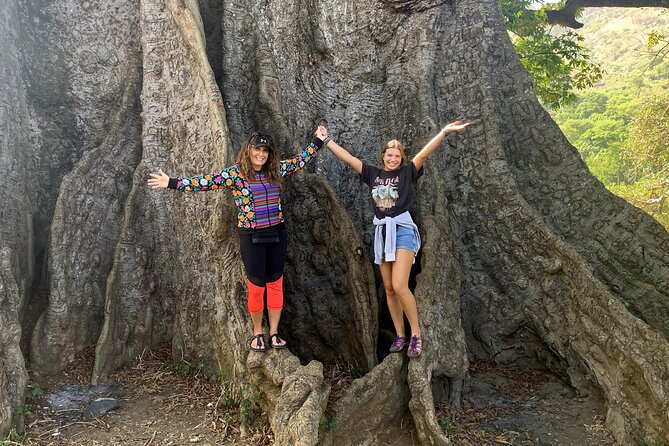
What I like here is the storytelling layered onto the hike. You’ll walk through a green valley known for baobab trees associated with Charles Darwin, and the valley is also tied to an escape route used during slavery. That blend makes the scenery feel meaningful, not just scenic.
Then there’s the local rum production element. The distillery visit depends on the season, since rum production runs from January 1 to May 31. If your trip falls outside that window, you might not see the exact same activity, so it’s worth asking your guide what’s operating when you arrive.
Cidade Velha UNESCO: Convent, Banana Street, Seafront Lunch
After the valley, you move to Cidade Velha, a UNESCO World Heritage Site and one of Santiago’s historical anchors. You’ll visit the São Francisco Convent, Banana Street, and the Nossa Senhora do Rosário church.
Lunch is built in at a typical restaurant right on the seafront. That’s a smart move. You get a real break instead of trying to snatch something while walking, and the meal fits the day, since you’re already shifting from hiking time to city time.
Pelourinho and São Filipe: Slave Market Ruins, Cathedral Remnants, and Pirate-Defense Views
Post-lunch, you continue to Pelourinho and then to the ruins and defenses connected to the old town. You’ll see the former slave market, the ruins of the Sé Catedral, and the Royal Fortress of São Filipe.
From the fortress, you get views over the whole old town and learn about the defense system used against pirates. That viewpoint is one of those moments where your brain clicks, because from up there, the layout makes sense.
Drawback to consider today: this is one of the heavier, multi-stop days. Even though the hike is rated easy, you’re still stacking walking plus heritage sites, so bring water and don’t plan to overdo it the night before.
Day 3’s Climb: Monte Tchota’s Microclimate and Pico D’Antónia’s 1394-Meter Summit
If Day 2 is about variety, Day 3 is about effort and reward. The day starts with a scenic drive to Rui Vaz and a climb through Monte Txota Natural Park.
Monte Tchota sits at about 800 meters and has its own microclimate, meaning it can feel cooler than lower parts of Santiago. That matters for comfort on a hike, especially with long sun exposure in Cape Verde.
The Summit Goal: Pico D’Antónia (4 to 5 Hours Total Trek)
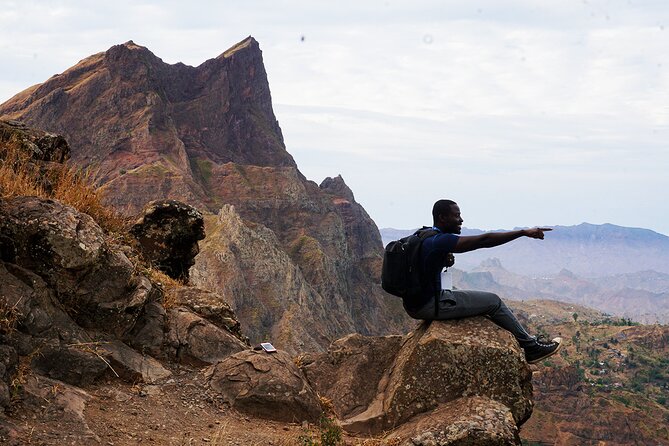
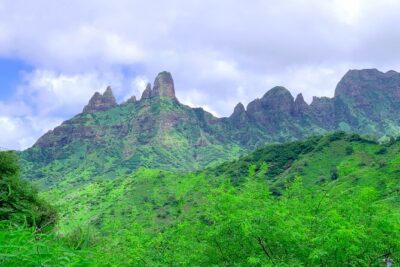
From Monte Tchota, you trek toward Pico D’Antónia, Santiago’s highest point at 1394 meters. You’re looking at panoramic views of the São Jorge Valley, and in good weather, you may see Maio Island and Fogo Island’s volcano.
This is rated difficult, with an ascent noted at about 672 meters and a longer walking duration of 4 to 5 hours. The paths are described as narrow and safe, but that wording still signals the real thing: you need to move carefully, stay aware of footing, and pace yourself.
You also get a small picnic stop on the way. The picnic includes soft juice, a sandwich, and fruit. I like that it’s built into the day rather than asking you to find lunch on your own.
What To Expect After the Summit
Once the trek ends, the route returns to Monte Txota Natural Park and then you drive back toward Rui Vaz and your hotel. This closing loop matters because it avoids an awkward, end-of-day scramble.
My practical advice: start hydrated, bring a hat, and treat this as your main cardio day. If your legs feel tight afterward, that’s normal here.
Day 4 Inland Market Energy and Serra Malagueta Nature Park to Tarrafal
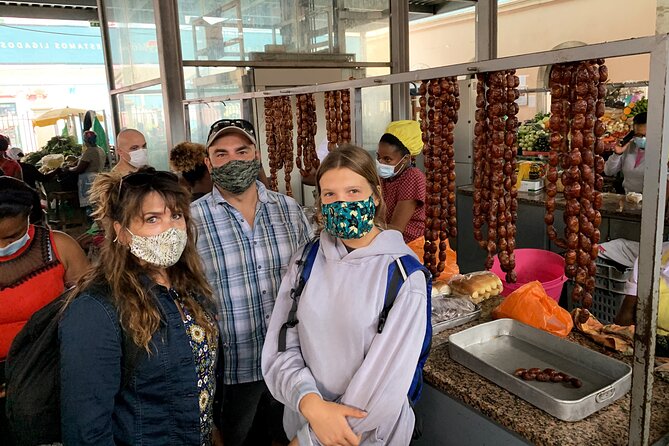
This day connects local life with outdoor time, without pretending every moment is hiking.
Assomada Market: Watch People Shop and Haggle (Only Certain Days)
You begin with pickup from your accommodation in Tarrafal. Then you head inland to the Assomada Market, where you can wander stalls and watch locals haggle for produce.
Important timing detail: the Assomada Market visit is only on Wednesdays and Saturdays. If your trip lands on a different weekday, your guide would likely adjust the plan, since the market visit itself is date-dependent.
Serra Malagueta Natural Park: Plant and Bird Counts, Plus Wildlife Chances
Next comes Serra Malagueta Natural Park. The program notes it covers 774 hectares and includes over 124 species of plant and 19 species of bird.
You hike with your guide through lush landscapes, and you’re encouraged to listen for local facts about the flora and fauna. The route also includes chances to spot monkeys, reptiles, and colorful butterflies.
After working up an appetite, you stop for rest at a scenic spot. That’s a good break because the day then transitions into beach time.
Tarrafal Beach: Free Time to Actually Recover
After lunch, you continue to the end of the trail and then drive to Tarrafal Beach. You get free time to chill on the shore, which is the right finish for a nature day.
This shift from park hike to beach downtime is a big reason this tour feels balanced. You’re not constantly “on.” You recover, then move.
Day 5: Tarrafal Beach Full Day, Plus the Chão Bom Concentration Camp Option
Day 5 is mostly yours, and that flexibility is valuable.
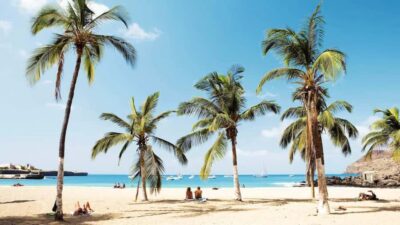
You start with breakfast at your accommodation, then you explore Tarrafal on your own. The highlight is time at Praia do Tarrafal, described as one of Santiago’s most picturesque beaches, with white sand and clear waters.
If you want movement, you can walk around town or just ride the slow rhythm. The point is to let your body catch up after Day 3.
Optional Stop: Chão Bom Concentration Camp
There’s also an option to visit the Chão Bom Concentration Camp, described as a resistance museum tied to political prisoners who fought against the dictatorship.
This is the kind of history visit that can deepen the whole trip. After hiking and countryside stops, it grounds you in how Cape Verde’s people endured and fought for change.
Consideration: since this is optional, you can choose based on your energy. If your legs are tired, beach time is still a win.
Day 6: Rabelados Thatched Homes, Santa Cruz Banana and Coconut Fields, and Katxupa in Plateau
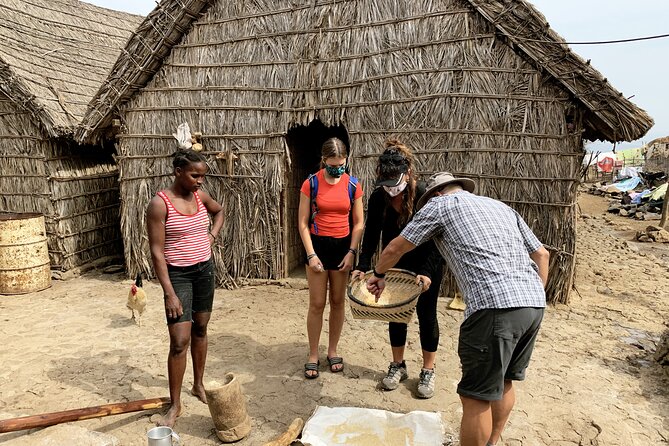
The final day follows the east coast, mixing cultural stops, a plantation walk, and city walking in Plateau.
Espinho Branco and Rabelados: Old Customs in Thatched Houses
Your first stop is Espinho Branco, where you visit the religious community of Rabelados. The key detail here is that it’s the only community still living in thatched houses and preserving Cape Verde’s oldest customs and beliefs.
You’ll also see local handicraft production and have the opportunity to buy handmade paintings from artisans. This is one of those cultural moments where shopping can be more meaningful because you’re meeting the people behind the craft.
Santa Cruz: Banana and Coconut Plantation Walk
Then you travel to Santa Cruz, described as the largest banana and coconut plantation in the country. You’ll take a small walk through the agricultural fields while a local guide explains the varieties of fruits and dozens of plants you’ll see along the route.
Even if you’re not a plant nerd, this helps connect what you’ve eaten all week to where it comes from. It’s also a lighter pace compared to the summit day.
Plateau Walking Tour: Military Barracks, Presidential Palace Area, and Market Life
Afterward, you head to Plateau for a walking tour through the Jaime Mota Military Barracks, passing by the Presidential Palace and the Alexandre Albuquerque Square.
You’ll also stop at the Municipal Market, noted as closed on Sundays. If your day falls on a Sunday, you should expect that market segment might not happen as written.
This market visit is about meeting locals and seeing everyday food life, especially fruits and vegetables. You finish the tour with food in mind.
Katxupa at Casa Katxupa, Then a Music Dinner Option at Quintal da Música
The food highlight is katxupa, described as Cape Verde’s national dish, served at Casa Katxupa. Dinner is then offered at your expense at Quintal da Música, paired with a local band playing traditional music, with katxupa included in that meal experience.
This ending is a strong note to end on. Hiking builds appetite, and katxupa is the kind of shared dish that feels like a real cultural wrap-up.
Hiking Details That Matter: Time on Your Feet, Path Quality, and What to Pack
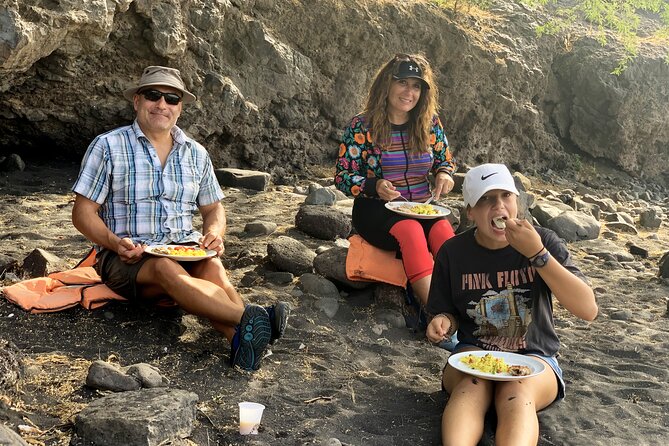
This tour isn’t just “walking,” it’s a sequence of different walking styles. Here’s what your body should expect, based on the way the routes are described.
On Day 2, the Calabaceira hike is about three hours, with around 4500 meters of extension and about 300 meters of ascent and descent. It’s rated easy and the path quality is described as medium tilt, narrow at the beginning, but safe.
On Day 3, Pico D’Antónia is the key challenge. Expect around 3000 meters of extension, about 672 meters of ascent, and a difficult rating. Paths are described as medium tilt, narrow but safe, so your pacing and footing matter.
On Day 4, Serra Malagueta is rated easy, with around 4200 meters extension, about 200 meters of ascent and descent. The path quality is flat, wide, and safe, which makes it a good counterbalance after the summit.
Day 5 is beach day, and Day 6 includes cultural and city walking plus plantation time, generally less intense than the peak trek.
What to Pack (The Tour Calls Out the Basics)
Bring sandals or flip-flops, a towel, a hat, swimwear, and sunscreen. I’d also suggest you bring a small daypack and water since you’ll be out during hiking hours and exposed sections can feel hot.
Picnic day equipment is handled for you with the picnic kit. Still, personal comfort items are on you.
Value Check on $1,102.91: What You’re Actually Paying For
At $1,102.91 per person for about six days, the headline price looks “premium” until you break down what’s included.
You’re getting five nights of accommodation, private arrival and departure airport transfers, hotel pick up and drop off for tours, and luggage transfers. You’re also getting tours as mentioned, plus entrance fees covered, and a local assistance contact available 24 hours a day.
Then there’s the meal structure: breakfasts are included for five days, and lunches are included for four days. Dinner is not fully included, which keeps flexibility, but it also means you can choose where to eat based on your mood.
The value here is the combination of logistics and time. If you tried to recreate this on your own, you’d spend real energy figuring out transportation between Praia, Cidade Velha, inland parks, and Tarrafal, and you’d still need to line up entrances.
The main cost add-on you should plan for is the tourist tax, paid locally at 2 euros per person per night. Visa or airport security fees may also apply depending on your situation, but those are outside the tour itself.
Who Should Book This Santiago Hiking Trip (And Who Should Skip)
This is a great fit if you want a guided blend of hiking and culture on Santiago, and you like structure without feeling locked in. The small group limit makes a difference, especially on heritage days where crowds can be a headache.
You’ll enjoy it most if:
- you can handle one difficult day on a summit hike
- you want both nature stops and UNESCO and fortress sights
- you like local food moments like katxupa, not just sightseeing photos
You might want to think twice if you’re brand new to hiking or you dislike narrow, steep sections. Day 3 is the reality check.
FAQ
What is the maximum group size for this tour?
The tour has a maximum of 6 travelers.
Are airport transfers included?
Yes. The tour includes custom and private arrival and departure airport transfers, plus hotel pick up and drop off for all tours.
Are entrance fees included?
Yes. All entrance fees are included.
What meals are included?
Breakfast is included for 5 days, and lunch is included for 4 days. Dinner is not included in the package.
When does the Assomada Market visit happen?
The Assomada Market is only visited on Wednesdays and Saturdays.
Is the Pico D’Antónia hike difficult?
Yes. The trek to Pico D’Antónia is rated difficult and is listed as about 4 to 5 hours of walking.
Should You Book This 6-Day Santiago Hiking Tour?
Book it if you want one trip that handles the driving, the timing, and the entry fees, while still giving you a proper hiking experience. The balance is strong: a valley hike day, a summit day, a nature park plus market day, then beach recovery with optional history.
Skip it if your hiking comfort level is low, because Day 3 is the toughest part and it does require stamina and careful footing on narrow paths. If you’re fit enough for a serious day, this is the kind of Santiago plan that leaves you with stories, views, and good meals at the end of each day.
All Our Cape Verde Reviews
Santiago Island, More Routes

More Cape Verde tours from the same review pile
- Hiking Águas Belas Cave
★ 4.5 · 3 reviews - Santiago Island: Private Airport Transfer to Praia or Vice Versa
★ 5.0 · 3 reviews - Best of Santiago Island: Cidade Velha, Workshop & Tarrafal Beach Tour
★ 4.5 · 3 reviews - Cape Verde: Best Hikking Trails of Santiago Island – 6 Days
★ 5.0 · 3 reviews - Praia: Plateau and Cidade Velha Guided Tour
★ 5.0 · 3 reviews - Praia City Tours
★ 3.4 · 3 reviews
Santiago Island Tours, compared.
 ★ 4.8Praia: Santiago Island Tour with Tastings and Tarrafal BeachFrom $76416 reviews
 ★ 4.8Santiago: Landscapes, Street Art, and Markets Day TripFrom $70316 reviews
 ★ 5.0Santiago Island Tour: Meet with a Local Family & Tarrafal BeachFrom $103127 reviews
 ★ 4.9Santiago Island: Highlights of Cidade Velha with Local GuideFrom $5767 reviews
 ★ 4.8Santiago Island: Serra Malagueta & Tarrafal Beach Trek TourFrom $10661 reviews
 ★ 4.8Santiago: Calabaceira Valley Trek & Visit to Cidade VelhaFrom $8249 reviews
 ★ 4.8Santiago: Monte Tchota Natural Park to Pico d’Antónia HikeFrom $10043 reviews
 ★ 4.6From Praia: Santiago Island Highlights TourFrom $10640 reviews
Browse the lists this tour appears in