
REVIEW · SANTIAGO ISLAND TOURS
Santiago: Longueira, Pico de Antónia & Monte Tchota Trek
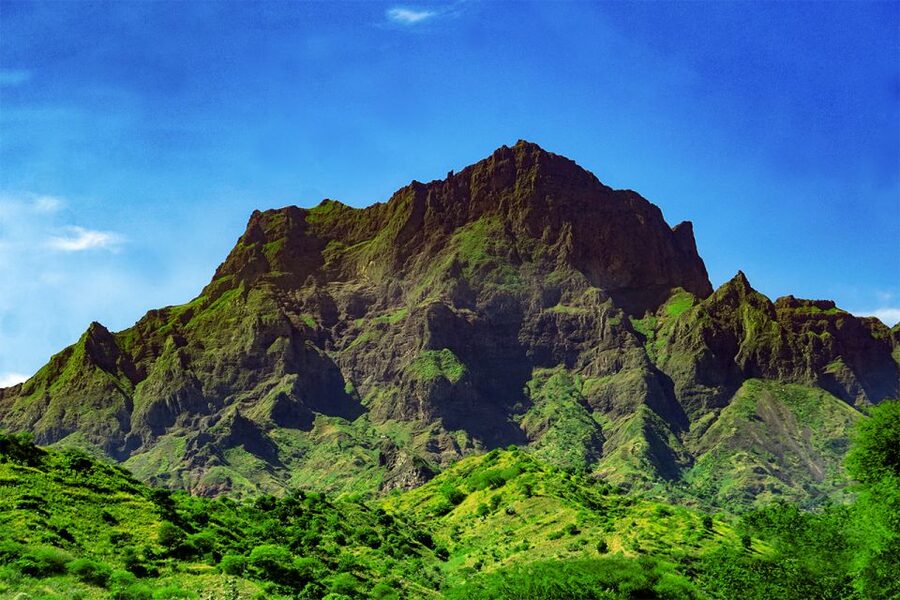
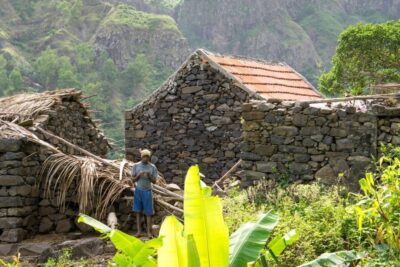
Pico de Antónia makes the climb worth it. This guided trek across Santiago layers big scenery with real village moments, starting in Longueira and ending in the natural park of Monte Tchota. I love the high payoff views from Pico de Antónia, where on clear days you might spot Maio Island and the volcano on Fogo Island. I also love how the Monte Tchota/Txota natural park feels untouched, with endemic plants and birdlife you do not see just by staying near town.
The tradeoff is that this is truly very difficult hiking, with narrow, tilty paths and a steep finish near the top. The climb is hard, but the return can feel even more slippery. If you go, bring proper hiking shoes, and consider walking sticks because the footing can get sketchy.
In This Review
- Key things I’d mark on your map
- From Praia to Longueira, you start with the island beyond the beach
- Grogue rum, a school visit, and Lemba Lemba Bar stops
- Pico de Antónia climb: the hard minutes that pay back fast
- Picnic pacing and seasonal touches in the strawberry fields
- Monte Tchota/Txota natural park: where the hike turns into wildlife watching
- Getting Fogo and Maio in your photos, and why conditions matter
- Trail quality, steep sections, and what to pack (really pack)
- Guides make the difference, from Ricardo to Djibril to Admilson
- Price and value: where $106 per person makes sense
- Should you book the Santiago: Longueira, Pico de Antónia & Monte Tchota Trek?
- FAQ
- How difficult is the Santiago trek?
- How long are the hikes?
- Is the trail one way?
- What is included in the price?
- What should I bring?
- What languages are the guides?
Key things I’d mark on your map
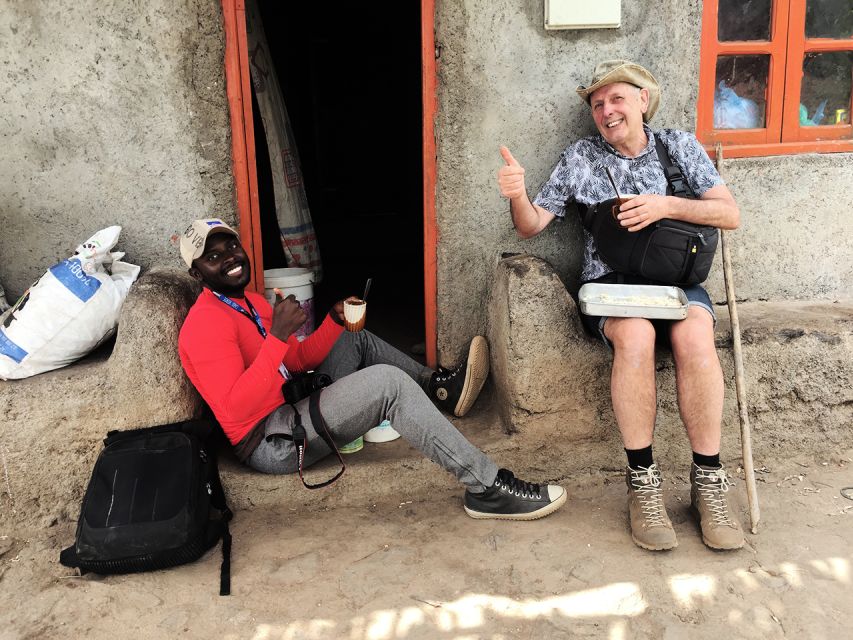
- Longueira village time: you stop at everyday places like the rum distillery, primary school, and Lemba Lemba Bar, not just scenic pull-offs.
- Two hike options: you can be looking at about 9 km and roughly 6 hours total, or about 6 km and roughly 4 hours total, depending on the route.
- Pico de Antónia views at 1,394 m: the summit area gives wide panoramas over São Jorge Valley.
- Monte Tchota natural park: focus is fauna, flora, and endangered bird species, not a quick stroll.
- Steep climbing plus slippery descent: guides often help with balance, and walking sticks are a smart idea.
From Praia to Longueira, you start with the island beyond the beach
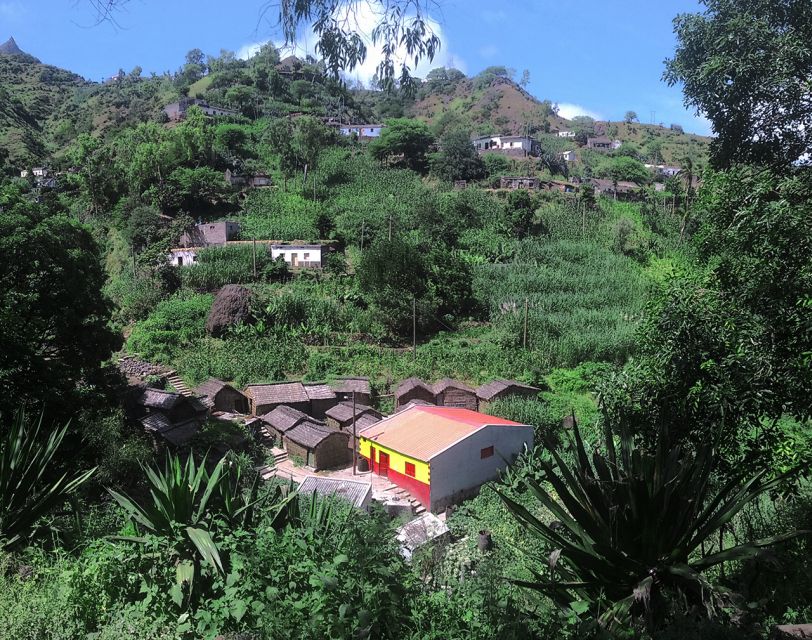
This trek begins with hotel pickup in Praia, then you head out toward the interior. The first benefit of that setup is time: you are not hunting for transport, and you arrive with energy rather than confusion. Once you reach Longueira, the experience changes from travel day to walking day, because the route is built around meeting local life while moving through the countryside.
I like that this is not only a summit-and-photos tour. You actually get time in a village setting: people live here year-round, and your stops feel like you are passing through daily rhythms. It also makes the later climb mean more, because you have context for what you are hiking above.
One more practical point: the terrain starts to teach you quickly. Even before Pico de Antónia, you are walking on paths that feel narrow and tilty. That is why footwear matters. This is not the kind of hike where you can show up in light sneakers and hope for the best.
Grogue rum, a school visit, and Lemba Lemba Bar stops
Longueira is where the tour adds personality. You visit the Grogue distillery, a place tied to local rum-making. This is the sort of stop that helps you understand the island’s tastes and traditions without turning it into a lecture. You are not just tasting, you are seeing part of how the community creates something people value.
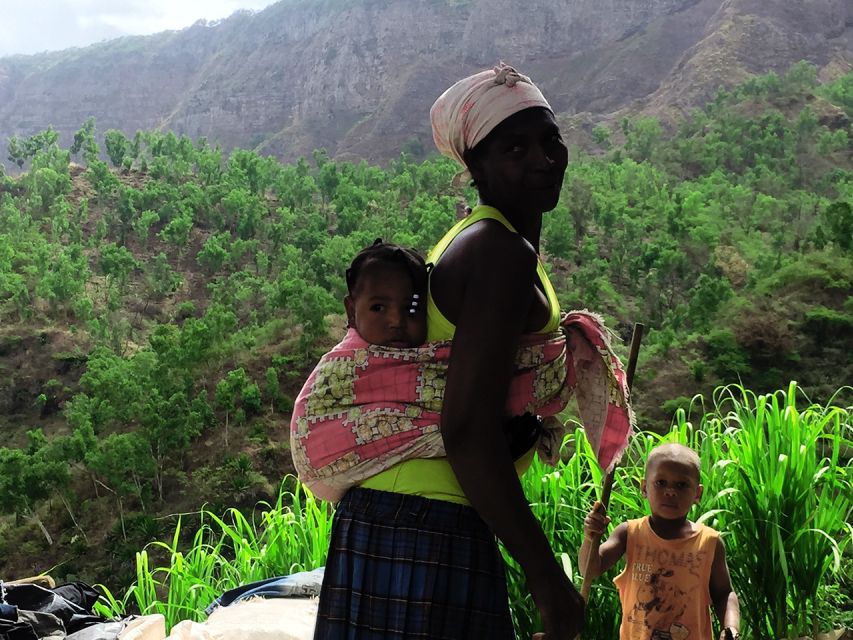
Then you include a primary school visit. This is a short stop, but it shifts the mood. It is one of those moments that reminds you that you are not just hiking in a photo backdrop. You are visiting a living community, and your guide helps keep it respectful.
After that, you stop at Lemba Lemba Bar. That adds a local social feel that you do not get from souvenir shops. If you like travel that feels human, these stops are a big part of why this trek stands out.
I will be straight with you: these village stops are still part of an active day. So even though they are interesting, you should not expect long, relaxed breaks. The schedule moves with the hiking plan, and that keeps the energy level high all day.
Santiago in other shapes, coast and interior
- Santiago: Calabaceira Valley Trek & Visit to Cidade Velha★ 4.8 · 49 reviews
- Santiago: Monte Tchota Natural Park to Pico d’Antónia Hike★ 4.8 · 43 reviews
- Discover Santiago island in 1 day★ 5.0 · 39 reviews
- Santiago Island: 4-Hour Calabaceira Valley Hike & Guided Tour to Cidade Velha★ 5.0 · 18 reviews
- Private Tour of Santiago – Discover the Island★ 4.5 · 18 reviews
Pico de Antónia climb: the hard minutes that pay back fast
Pico de Antónia is the centerpiece. It is Santiago’s highest point, and the route is designed so you build up gradually, then hit the steeper segments as you near the top.
For the longer route option, you are looking at about 9 km of walking and roughly 6 hours total walking time, including time for a stop and viewpoints. You will climb around 1,050 m and drop about 600 m on the day, with a max elevation around 1,390 m. For the shorter option, the distance is about 6 km with about 4 hours total walking time, and the elevation change is smaller (gain around 585 m).
Either way, Pico is not a casual stroll. Guides and previous hikers highlight that the final meters can climb steeply. One detail I really appreciate is that guides show you spots along the way for photos and viewpoints, not just at the summit. That means you start seeing the payoff before you reach the top, and you feel less like you are suffering in silence for hours.
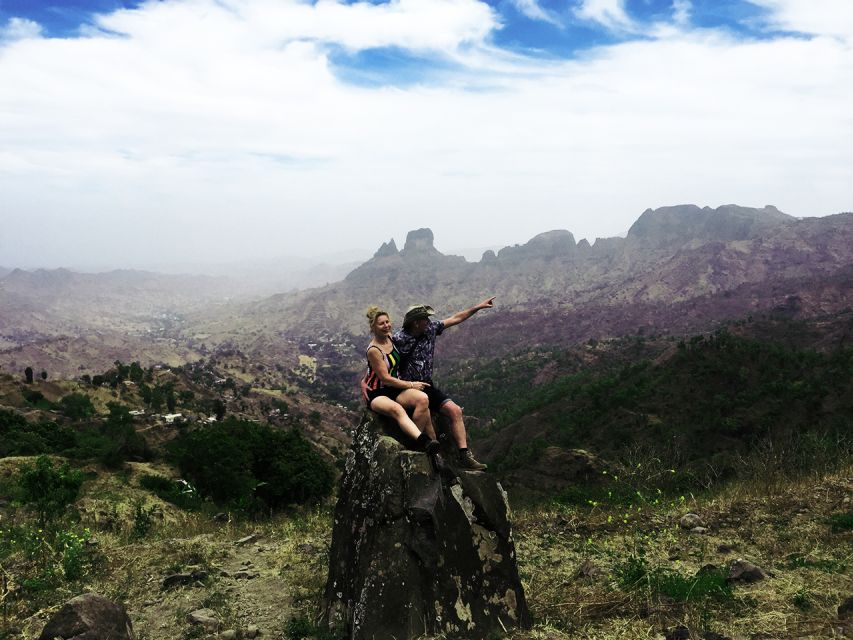
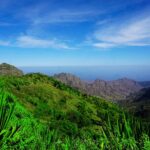
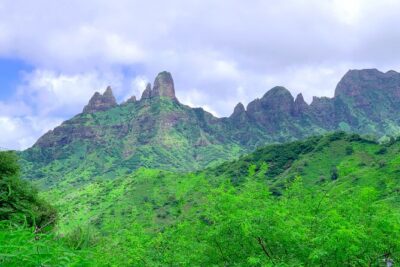
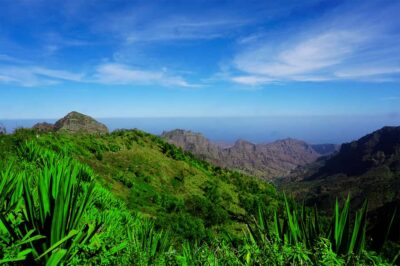
At the walking point around 1,394 m, the panoramic views over the São Jorge Valley are the reward. On clear days, your guide may help you look out for Maio Island and the volcano on Fogo Island. Even when you do not get those distant views, the mountain angles, cloud movement, and valley depth can still make for strong photos.
Picnic pacing and seasonal touches in the strawberry fields
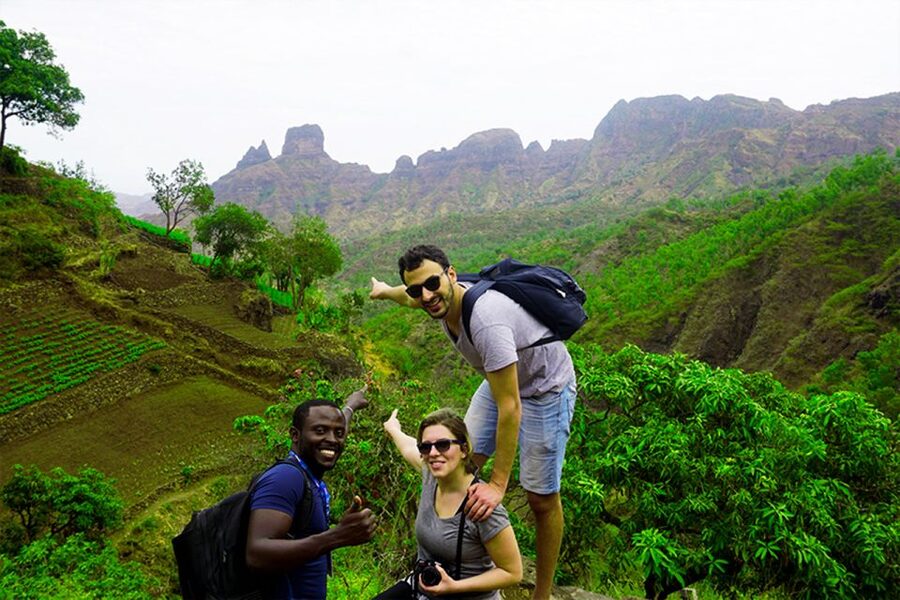
There is a picnic stop built into the hike, typically during the climb-up. The food includes soft juice, a sandwich, and fruit. This is the kind of simple fuel that works well on altitude-ish hiking, because it is easy to eat without turning your stomach into a problem later.
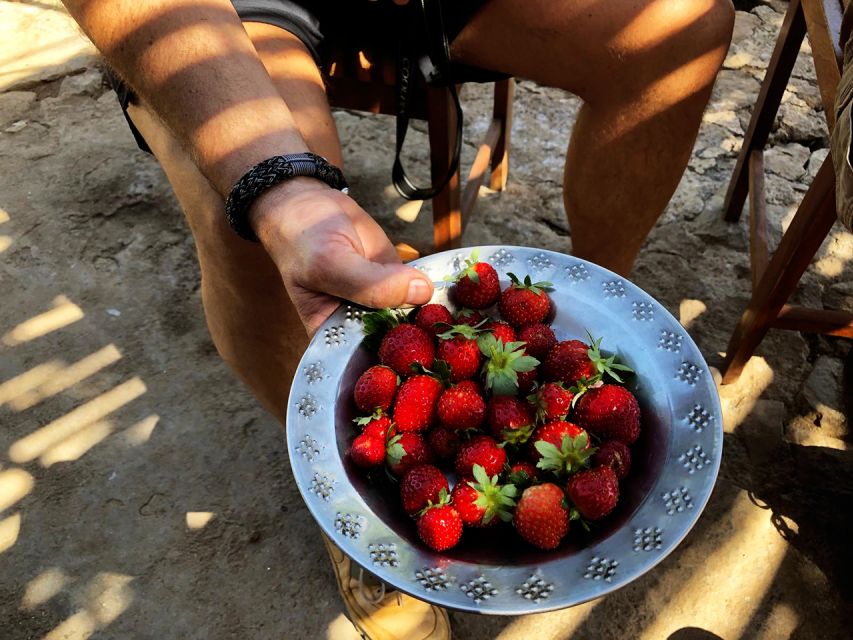
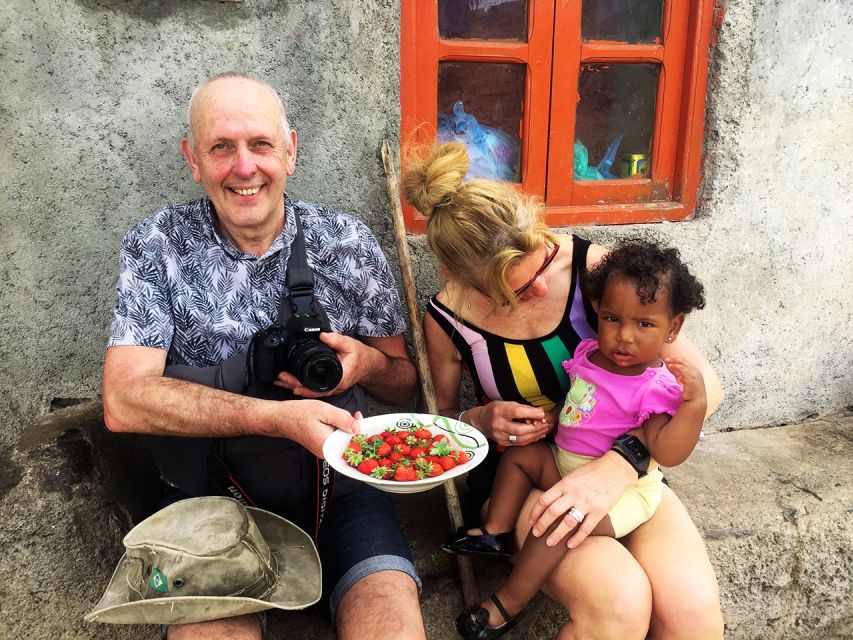
One seasonal detail is worth knowing: from December to May, you may walk up among strawberry fields. That matters because it breaks up the monotony of only rock and scrub. It also gives you something different to look at with your photos, not just steep angles and sky.
In practical terms, this is also where pacing helps. You usually get a short rest, but the day is still a climb plus a continued route. If you tend to burn out, use the picnic stop to reset your pace and hydration. You do not want to arrive at the steeper last part already running low.
Monte Tchota/Txota natural park: where the hike turns into wildlife watching
The finishing act is the natural park of Monte Tchota/Txota. This is where the trek shifts from summit goals to nature focus.
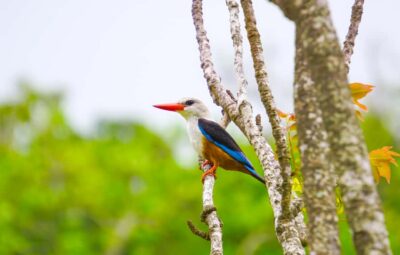
The emphasis here is endemic plants, animals, and some bird species that are in danger of extinction. In other words, you are walking with an eye for the small stuff, not just big views. If you love bird spotting or plant details, this portion can feel especially satisfying because it gives your attention a job.
The park walk also brings a different kind of challenge. The paths are narrow and tilty, and your attention has to stay on footing. The goal is movement with awareness. That is also why the guide’s role gets bigger here. A good guide keeps you on the safe line through tricky patches, and they help you spot what is worth stopping for.
One more reason Monte Tchota/Txota is a strong ending: it shifts the feeling from peak effort to quieter accomplishment. You finish the hike after reaching your high point and then spend time in a protected area where the point is “look closely.”
Getting Fogo and Maio in your photos, and why conditions matter
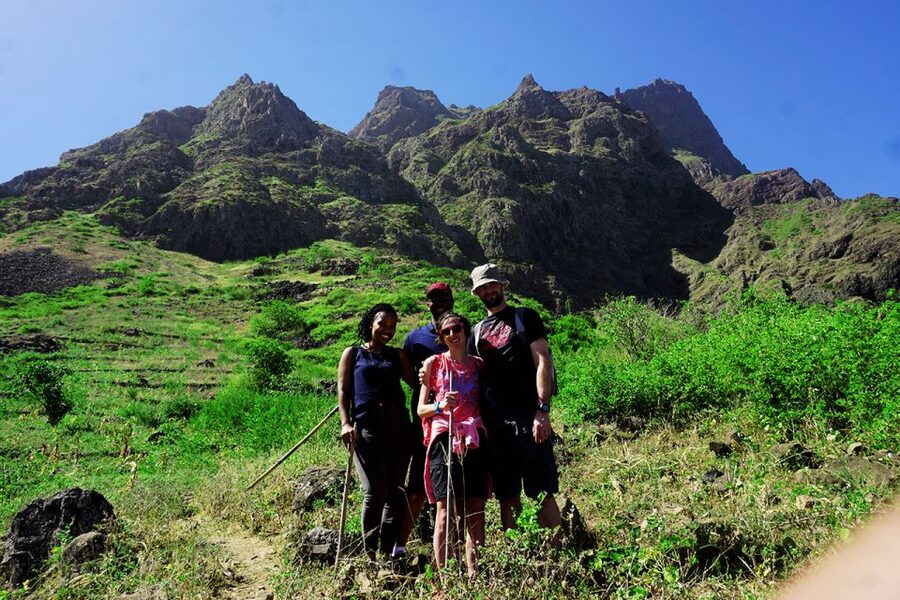
A lot of tours promise views. This one is specific about what you might see: the volcano on Fogo Island and Maio Island. The key word is might. Visibility depends on the day, and you can have perfect effort without perfect sightlines.
What you can control is your readiness. If you care about photos, bring sunscreen, drink water, and protect yourself from wind at higher points. Strong light can wash out contrast in images if you are not using shade for a moment and adjusting your angles.
Also, remember that the route is one-way. That matters because you are not doing a simple backtrack where you can easily change your viewpoint mid-hike. You want to stop when your guide points out the best angles, and then keep moving when they say it is time.
The other thing I appreciate is the rhythm: views are not just dumped on you at the top. You get panoramas on the way up, then again at the peak. That spreads the “wow” across the day rather than stacking it all at once.
Other climbs into the Santiago highlands
Trail quality, steep sections, and what to pack (really pack)
The tour is rated very difficult on the longer version. The path quality is described as tilty and narrow. That combination is a real-world warning: you need stable footing and you need to pay attention while walking.
Here is what you should bring based on the provided requirements:
- Hat
- Hiking shoes (not optional)
- Sunscreen
- Water
If you want one upgrade beyond that list, bring walking sticks if you have them. The hike guidance strongly recommends them, and multiple reviews mention that walking sticks were provided, which is smart because they help on both steep climbing and slippery descents.
On the day, I would plan for:
- Steep moments near the top of Pico de Antónia
- A return that can feel longer than the climb because it can be very slippery
You do not need to be a trail athlete. You do need to be prepared to work hard, keep your balance, and follow your guide’s pace.
Guides make the difference, from Ricardo to Djibril to Admilson
One of the most praised aspects of this trek is the guiding. Different names show up across reviews, and they all point to the same thing: guides know the terrain and also know people.
You might be guided by Ricardo, and he is praised as kind and friendly. Djibril is described as professional, jovial, attentive, and respectful. Admilson Garcia is singled out for knowing the region really well and knowing many locals, which can add depth when you are passing through villages like Longueira.
A couple of practical guide details show up repeatedly. First, guides help you find photo spots at different points on the ascent. Second, they support you through tricky sections, especially when the descent is slippery. One review even notes a walking-sticks setup as a helpful element.
If you enjoy learning in the moment, look for a guide who points out the plants and birdlife and explains what you are seeing, not just where to step next. This trek is better when you walk with your eyes open.
Price and value: where $106 per person makes sense
At $106 per person, this is not a budget add-on, but it also does not feel inflated for what you get. You are paying for:
- Pickup and drop-off at your hotel in Praia
- Transportation
- A tour guide
- A picnic with soft juice, sandwich, and fruit
- Liability insurance
The value logic is simple. You would spend time and effort arranging transport and a guide on your own, and you would lose the built-in rhythm of village stops plus the natural park focus. Here, the day is structured, and you are covered with insurance.
Also, the trek includes two different route lengths and difficulty levels. That flexibility can matter for your planning. If you are fit but want a shorter option, you can target the route that still includes the key experiences.
One last note on the group setup: the shared group version depends on a minimum number of participants. If they do not meet that, the provider may propose another date, charge extra for a private option, or cancel for a full refund. If you want this on a tight calendar, I suggest choosing the date with some buffer.
Should you book the Santiago: Longueira, Pico de Antónia & Monte Tchota Trek?
Book it if you want an active day that connects three layers of Santiago: village life in Longueira, the physical challenge and views of Pico de Antónia, and the nature focus of Monte Tchota/Txota. It is ideal if you like hikes with meaning, not just mileage.
Skip it or reconsider if you are not comfortable with steep climbing and narrow, tilty paths. This is very difficult on the longer route, and the descent can get slippery. You also need the right gear. Hiking shoes are a must, and walking sticks can make a real difference.
If your dream trip is a guided, hands-on day with good guides, wildlife spotting, and big panoramic payoff, this tour is a strong match.
FAQ
How difficult is the Santiago trek?
The trek is listed as very difficult on the longer option and difficult on the shorter option. Expect steep climbing (about 1,050 m elevation gain on the longer option) and narrow, tilty paths, with a slippery return possible.
How long are the hikes?
There are two route options. Option 1 is about 9 km and about 6 hours of total walking time. Option 2 is about 6 km and about 4 hours of total walking time.
Is the trail one way?
Yes. The trail type is one way for both route options.
What is included in the price?
Pickup and drop-off at your accommodation in Praia, transportation, a tour guide, a picnic (soft juice, sandwich, fruit), and liability insurance are included.
What should I bring?
Bring a hat, hiking shoes, sunscreen, and water. Hiking pants are strongly advised, especially from August to November, and walking sticks are recommended.
What languages are the guides?
Languages offered include Spanish, English, French, and Portuguese.
All Our Cape Verde Reviews
Serra Malagueta and Pico de Antonia
Santiago Island, More Routes
More Cape Verde tours from the same review pile
- Hiking Águas Belas Cave
★ 4.5 · 3 reviews - Santiago Island: Private Airport Transfer to Praia or Vice Versa
★ 5.0 · 3 reviews - Best of Santiago Island: Cidade Velha, Workshop & Tarrafal Beach Tour
★ 4.5 · 3 reviews - Cape Verde: Best Hikking Trails of Santiago Island – 6 Days
★ 5.0 · 3 reviews - Praia: Plateau and Cidade Velha Guided Tour
★ 5.0 · 3 reviews - Praia City Tours
★ 3.4 · 3 reviews
Santiago Island Tours, compared.
 ★ 4.8Praia: Santiago Island Tour with Tastings and Tarrafal BeachFrom $76416 reviews
 ★ 4.8Santiago: Landscapes, Street Art, and Markets Day TripFrom $70316 reviews
 ★ 5.0Santiago Island Tour: Meet with a Local Family & Tarrafal BeachFrom $103127 reviews
 ★ 4.9Santiago Island: Highlights of Cidade Velha with Local GuideFrom $5767 reviews
 ★ 4.8Santiago Island: Serra Malagueta & Tarrafal Beach Trek TourFrom $10661 reviews
 ★ 4.8Santiago: Calabaceira Valley Trek & Visit to Cidade VelhaFrom $8249 reviews
 ★ 4.8Santiago: Monte Tchota Natural Park to Pico d’Antónia HikeFrom $10043 reviews
 ★ 4.6From Praia: Santiago Island Highlights TourFrom $10640 reviews
Browse the lists this tour appears in