
REVIEW · KITESURFING & SURF LESSONS
Sal: Kitesurfing Lessons
A first look at a power kite is always a little scary. In Sal, Cape Verde, this lesson turns that wow factor into a real skill plan, with an IKO qualified instructor guiding you from kite control to first water technique. I especially like the step by step structure and the fact that you learn at your own pace, not on someone else’s schedule. I also like that you get hotel pickup and drop-off plus equipment, so you can focus on learning instead of logistics.
The main consideration: if you expect to be fully riding by the end of one session, you might feel let down. Kitesurfing is harder than it looks, and the training progression takes multiple lessons for most people, especially if waves are up.
In This Review
- Key things you should know before you go
- Sal, Cape Verde winds, and why this place works
- What happens in your lesson, from Intro Kite to independent riding
- Intro Kite (Level 1): learning control before you try to ride
- Kite Course (Levels 1 to 4): progression toward board skills and riding
- Safety, gear, and the coaching that keeps you learning
- Wind, waves, and the beginner reality check
- Price and value: is $141 a fair deal?
- Where you meet, and how to stay on schedule in Santa Maria
- Who should book this lesson, and who should skip it
- Tips to get more out of your 2 hours
- Should you book Sal kitesurfing lessons?
- FAQ
- How long is the kitesurfing lesson?
- How much does the lesson cost?
- Where is this lesson located?
- What is included in the price?
- Do I need to bring my own gear?
- Is this lesson for beginners?
- Do I need to be able to swim?
- What languages are offered?
- Is it a private group or shared group?
- Where exactly is the meeting point in Santa Maria?
- How do I confirm the start time?
Key things you should know before you go
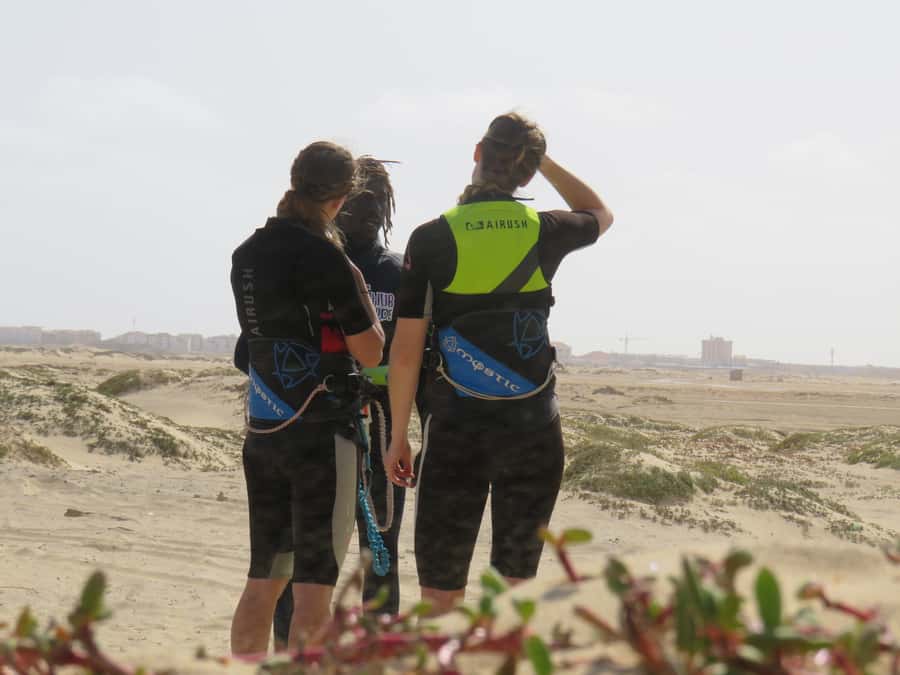
- IKO qualified instruction from a trainer who can coach beginners clearly
- Private group learning, so the pace can match your comfort level
- Strong wind practice in Sal, built around real kite skills on the water
- Clear progression options, from Intro Kite body dragging to later board water starts
- Swimming is required for the water sessions, and you’ll be in the action early
Sal, Cape Verde winds, and why this place works
Sal is one of those kiteboarding-friendly destinations where the weather helps you. When the wind is in a good range, the whole sport makes sense fast, because the kite actually does what it’s supposed to do: lift, pull, and steer you across the water. That’s the goal here.
This lesson is built to use those conditions around Sal’s beaches, with training that moves from kite control on land to direct technique in the water. You’re not just watching from shore. You’ll be working with the kite in real time, which is the fastest way to understand how power kites behave as the wind changes.
One small practical point: Sal can also mean chop and waves. That’s not a problem by itself, but it matters for comfort. If you’re a brand-new beginner, you may find the water stage more challenging when conditions are rough. That’s why your instructor’s judgment and your willingness to take things slowly really matter.
What happens in your lesson, from Intro Kite to independent riding
Your booking is designed to match your level, and that’s important. Kitesurfing is not a single skill. It’s a stack of skills: kite setup, safety systems, body control, relaunching, direction changes, and then putting it all together with the board.
For beginners, the most common starting point is the Intro Kite session (the first lesson). It runs you through a sequence that starts safely on land and gradually adds water time.
Other lessons in the Sal trade winds
- Sal: Kitesurfing Lessons★ 4.0 · 7 reviews
Intro Kite (Level 1): learning control before you try to ride
This option begins on land and includes both land and water practice.
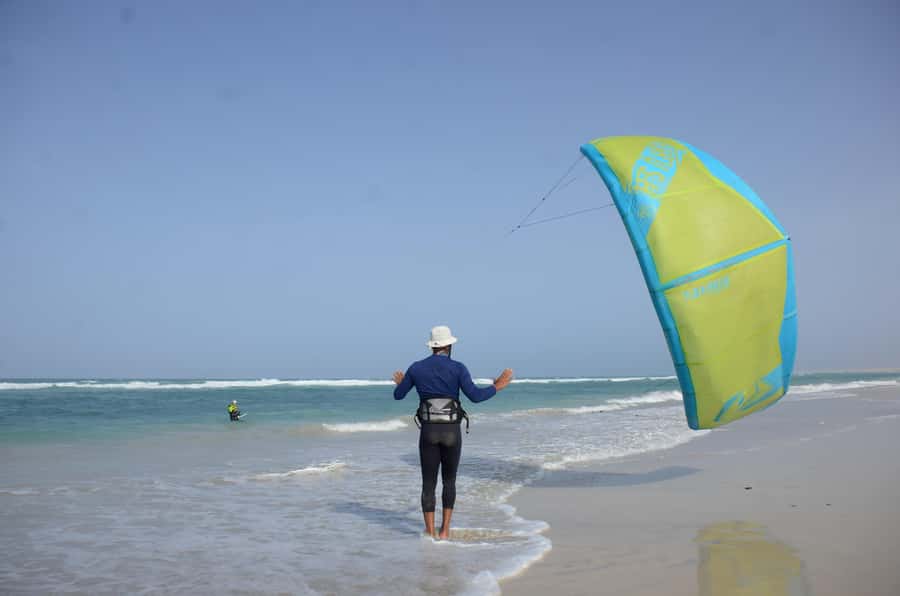
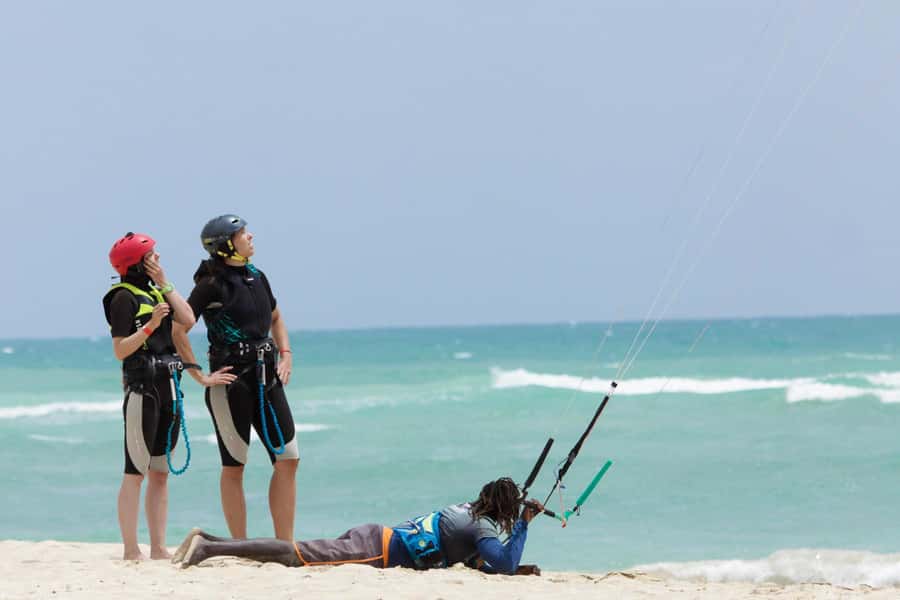
First, you practice with a training kite to learn basic flying skills. This step matters because it teaches the basics of steering and power without the board pressure. Then your instructor moves you into the setup and safety systems for the big kite, so you understand what to check before you enter the water.
Next comes practice on land with the instructor. This is where you build confidence with the big kite and learn the rhythm of controlling it while you stand in place. After that, you go into the water, and you do not go alone. The instructor enters the water with you and teaches techniques like body dragging without the board.
The body dragging stage has one job: get you comfortable being pulled and moving in the water with the kite while you focus on kite control. You’ll also learn:
- how to get away from the beach
- how to return back to the beach
- how to launch the kite from the water
Important requirement: you must be able to swim for the Intro Kite water portion. If swimming is shaky for you, ask your instructor before you book, because this experience expects you to handle time in the water.
Kite Course (Levels 1 to 4): progression toward board skills and riding
If you choose a course that includes multiple lessons, the training builds like this:
Second lesson: you learn to go towards the wind (upwind) and away from the wind (downwind). You also practice relaunches from the water and direction changes while you’re body dragging. This is where a lot of the “control” part turns into “travel,” because upwind and downwind movement is what eventually leads to real riding.
Third lesson: you get an introduction to the board. You start by body dragging with the board in one hand while you handle the kite. Once that feels manageable, your instructor shows you how to put the board on your feet and complete a water start, where you get up on the board to begin riding.
Fourth lesson: you practice water starts and start riding a little in each direction. The goal here is independence, so by the end of this stage you should be ready to kite on your own, then rent equipment and practice.
A key expectation reset: one single session is usually not the finish line. Even with strong wind, kitesurfing has a learning curve. If you’re buying this expecting to end with big, confident rides, set a more realistic goal: leave with working fundamentals you can build on next time.
Safety, gear, and the coaching that keeps you learning
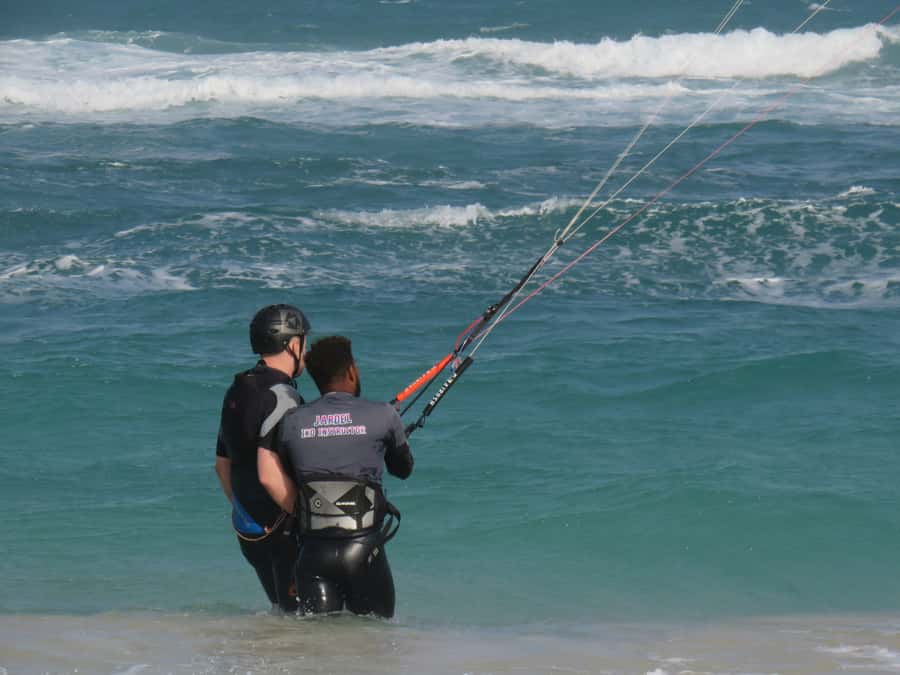
Kitesurfing training is mostly about managing risk while you learn something physical and technical. That’s why this lesson focuses early on kite safety and system setup. The Intro Kite option explicitly covers the setup and safety systems for the big kite, after you learn control basics with the training kite.
You’ll also get kite surfing equipment for the lesson, plus hotel pickup and drop-off. That combination is value for your day. You’re not hunting down gear or coordinating transport at the same time you’re trying to learn how to manage power and wind.
Instruction languages include English, Portuguese, French, Italian, and Spanish, so you can expect a real conversation, not just hand gestures.
From the feedback tied to the provider’s team, you’ll likely meet friendly, patient coaching. One review highlights Amy and the team for being helpful and making the lesson comprehensive and fun, even while it’s harder than it looks. That last point is a big one. If the instructor sounds relaxed and clear, you’ll learn faster because you spend less time panicking and more time repeating the right actions.
Wind, waves, and the beginner reality check
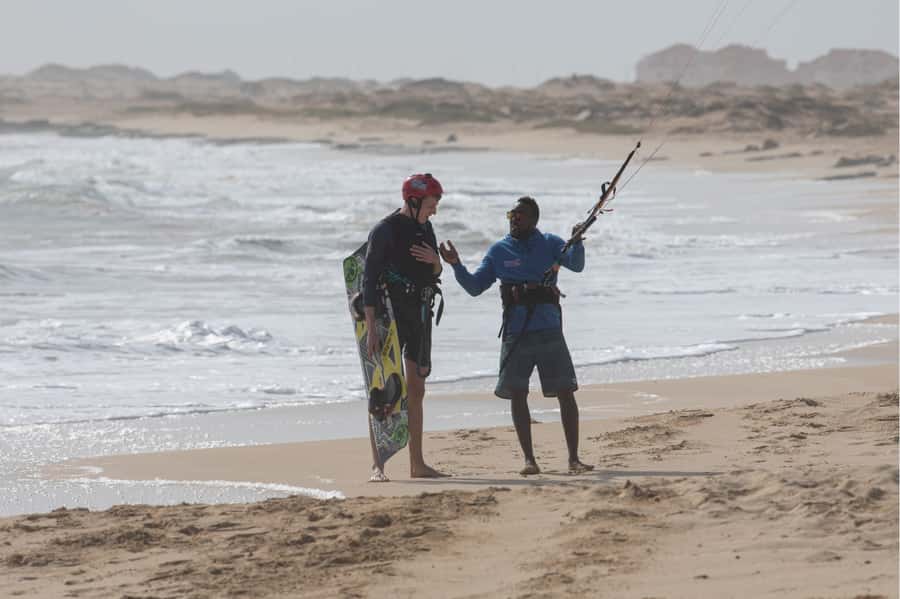
Sal’s wind is part of the attraction. Your advantage is that you can practice kite behavior in real conditions instead of only imagining it. Your challenge is that wind and water don’t care about your confidence.
If you’re totally new, waves can make the water stage feel like a bigger jump than you expected. One concern that pops up is that conditions can be wave-heavy for very first-timers. That doesn’t mean you should cancel. It means you should go in knowing your first wins might be small and focused: better kite control, cleaner body dragging, improved relaunch technique.
Here’s the practical way to think about “what you’ll get done” in one session. You’ll likely complete key parts of your level progression, but independent riding is usually a multi-session goal. If you want to aim for actual riding at the end of the lesson, you should be honest with your instructor about your experience level and ask what stage of the progression you can realistically reach given wind and your comfort in the water.
The upside is that even when you do not ride much at first, you’re still training the foundation. Learning upwind, downwind, relaunch basics, and water starts are the milestones that matter. The water time is where muscle memory begins.
Other sessions where you make something

Price and value: is $141 a fair deal?
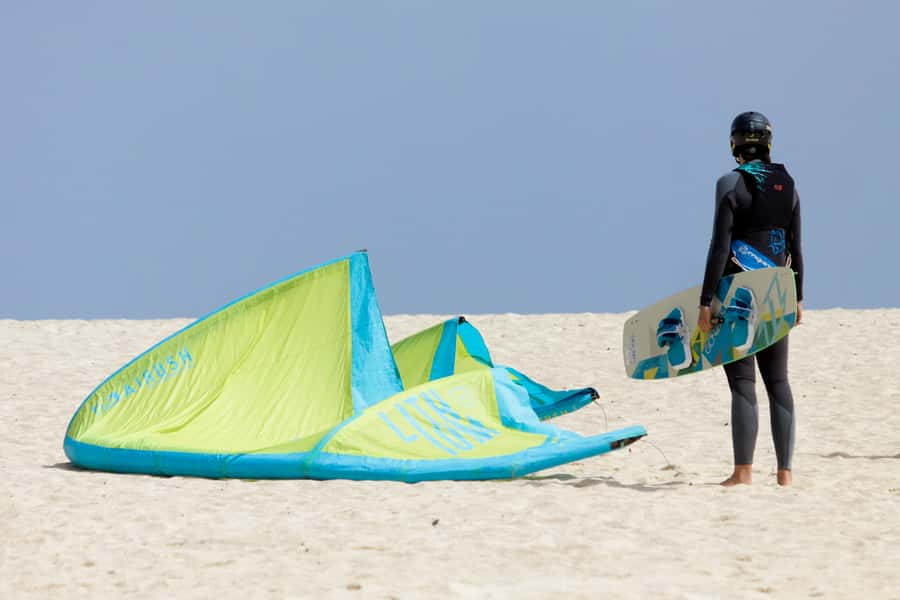
The price listed is $141 per person for a 2-hour lesson. For a sport like kitesurfing, that cost is usually less about “being on the water” and more about paying for instruction time, safety guidance, and the gear package.
In this case, you get several value boosters:
- Hotel pickup and drop-off, which saves time and reduces stress
- Equipment included, so you don’t pay extra for rentals
- Private group format, which typically means more attention per person
- IKO qualified instructor, so you’re not just getting a casual guide
Is it expensive? It can feel that way, especially if you’ve never budgeted for action sports coaching. But it tends to be worth it because kitesurfing is not a “try it and hope” activity. Getting the safety systems and technique right early prevents wasted sessions and reduces frustration.
The one “value trap” to watch for is expecting one lesson to equal independence. If your main goal is to kite on your own right away, the best value often comes from choosing the course progression that matches your ambition, rather than buying the minimum and hoping the wind does the teaching.
Where you meet, and how to stay on schedule in Santa Maria
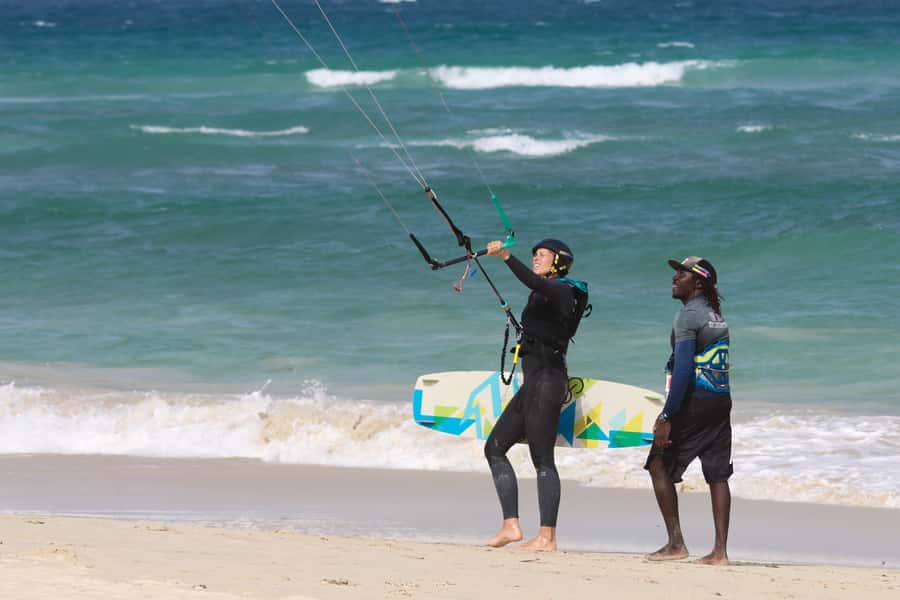
Your session is set up around Santa Maria. The meeting point is on the road by the ocean, across the road from fabrica de grelhados, just by the Main Square and Ocean Cafe.
After you book, you coordinate start time via WhatsApp, since it varies day to day. That flexibility is normal for wind sports. The practical move: message quickly after booking so you don’t lose the best window.
Dress and gear details are not listed in the info you provided, so keep your own kitesurfing basics in mind. Wear something you can move in comfortably, and plan for getting wet. Bring a towel and a change of clothes, because the lesson ends with you back on shore, not in a spa mood.
Who should book this lesson, and who should skip it
This is designed for complete beginners and also for people who have tried before. The lesson options let you start with Intro Kite or move into the multi-lesson Kite Course progression.
You should book if:
- you want a structured path rather than random practice
- you’re comfortable learning safety systems and kite handling
- you can swim, because you’ll be in the water
- you prefer instruction with a private group setup
You should think twice if:
- you’re not a confident swimmer, because water practice happens early
- you need accessibility accommodations, since this isn’t suitable for people with mobility impairments
Also, if your expectations are “I’ll be riding at the end of the first session,” adjust your goal. The safer, smarter mindset is that you’ll come away with technique wins and the plan to build from there.
Tips to get more out of your 2 hours
You only have a short block of time, so your results depend a lot on how you show up.
- Go in ready to repeat. Kitesurfing is skill repetition, not one big moment.
- Tell your instructor what you’re feeling. If something scares you, say so early. That helps them choose how hard to push within safe limits.
- Focus on kite control before you chase speed. If the kite is stable and you’re moving the way you’re told, you’ll progress faster.
- Treat upwind and downwind as major milestones. Even if you’re not fully riding, understanding the direction relationship with wind is huge.
- If waves are high on your day, keep your goal small: body dragging that feels controlled is still a win.
One more reality check with a little humor: kitesurfing looks stylish from the beach, like you’re gliding. Up close, it’s more like negotiating with a moving machine powered by wind. Your job is to stay calm and learn the communication between your body, the control bar, and the kite.
Should you book Sal kitesurfing lessons?
I think you should book if you want real coaching, not a casual try. The IKO qualified instruction, equipment provided, and private group format are strong reasons to pay for structured learning. Sal’s conditions also help, because you’re practicing in the kind of wind the sport depends on.
I’d say wait or rethink if you’re mainly chasing a last-minute thrill ride. One session is often the start, not the finish. The best path to independence is the progression from Intro Kite through later lessons that cover relaunches, upwind and downwind, water starts, and ultimately riding in different directions.
If you book, message the team on WhatsApp as soon as you can so you lock in the right start time for the wind that day. Then show up ready to learn the fundamentals. That’s the fastest route from “this looks hard” to “I can actually control the kite.”
FAQ
How long is the kitesurfing lesson?
The experience is listed as 2 hours per booking.
How much does the lesson cost?
The price is $141 per person.
Where is this lesson located?
It takes place in Sal, Cape Verde, with the meeting point in Santa Maria by the ocean.
What is included in the price?
The lesson includes hotel pickup and drop-off and kite surfing equipment for the duration of the lesson.
Do I need to bring my own gear?
No, the kite surfing equipment is included for the lesson.
Is this lesson for beginners?
Yes. Lessons are suitable for complete beginners and also for people who have previously tried kitesurfing.
Do I need to be able to swim?
Yes. The water-based parts require you to be able to swim.
What languages are offered?
The instructor can teach in English, Portuguese, French, Italian, and Spanish.
Is it a private group or shared group?
It is a private group.
Where exactly is the meeting point in Santa Maria?
You meet in Santa Maria on the road by the ocean, across the road from fabrica de grelhados, just by the Main Square and Ocean Cafe.
How do I confirm the start time?
After booking, you contact the provider via WhatsApp, using the number shown on your voucher, since the start time varies each day.
Sit Down and Make Something


All Our Cape Verde Reviews



Kitesurf and Surf Lessons
More Cape Verde tours from the same review pile
- Sal: Small Group Island Tour & Lunch with a Local Family
★ 4.4 · 3 reviews - Sal: Romantic Sunset Escape with Wine and Roundtrip Transfer
★ 4.3 · 3 reviews - Postcards of Boa Vista 4×4 Tour with Shipwreck & Local Lunch
★ 4.5 · 4 reviews - Boa Vista Full Day 4×4 Island Tour with Beachfront Lunch
★ 3.5 · 4 reviews - Santa Maria: Half-Day Diving Trip in Sal with Pickup
★ 4.7 · 6 reviews - Sal: Kitesurfing Lessons
★ 4.0 · 7 reviews
Kitesurfing & Surf Lessons, compared.
 ★ 5.0Surf LessonsFrom $3960 reviews
 ★ 4.7Sal: Surf LessonFrom $4048 reviews
 ★ 5.0Kite Surf Lessons on Sal IslandFrom $15317 reviews
 ★ 5.0Kitesurf Lessons in Cape VerdeFrom $1418 reviews
Browse the lists this tour appears in