
REVIEW · SANTO ANTãO DAY TRIPS
Santo Antão: Day Trip by Car or Trek
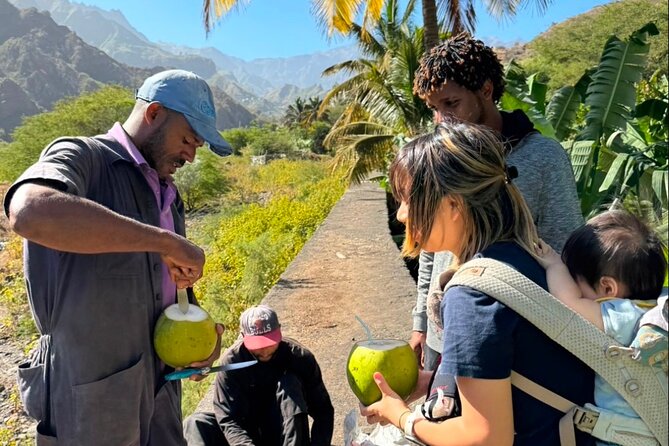
Santo Antão feels like a secret escape. The best part is the morning ferry ride from Mindelo, and the way guide Madu, born on Santo Antão, strings the day together with real island context. You also get a rum distillery stop for grogue tasting, but do plan for an early start and a full, long day of driving.
This is a flexible day trip where you can do a car route with optional walking, or lean more into a hike or trek style if you want. The schedule is built around big viewpoint moments like Pico da Cruz and the Cova crater, plus town stops for local life, markets, and fishing scenes. It’s 7 to 11 hours and capped at 12 people, which keeps it personal, but not slow.
In This Review
- Key highlights worth your attention
- Ferry crossing from Mindelo sets the tone for Santo Antão
- Two start options, one goal: reach the mountains efficiently
- The old cobblestone climb and the ridge viewpoint at Delgadinho
- Pico da Cruz above the clouds, then into the Cova crater
- Ribeira Grande, Povacao lunch time, and the color of village life
- Xôxô valley green farming and Ponta do Sol’s fishing port
- Grogue time at Beth d’Kinha and Eito rum distilleries
- Return via Janela coastal road and Farol de Fontes Pereira de Melo
- Price and value: what $104.68 gets you in a one-day island jump
- Pace and practicality: how “trekking” this day really is
- Who should book this Santo Antão car day, and who should skip it
- Should you book this Santo Antão day trip?
- FAQ
- How long is the Santo Antão day trip?
- Where does the tour start?
- What is included in the price?
- Is lunch included?
- Are alcohol tastings included?
- Do I need trekking experience?
- How many people are in the group?
- Can I cancel for free?
- What languages are guides available in?
Key highlights worth your attention
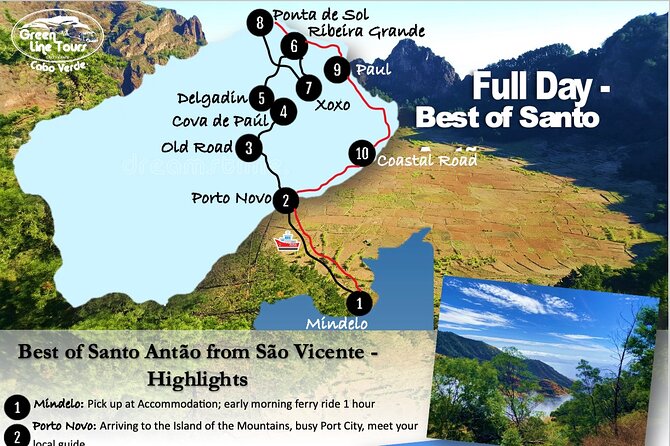
- Mindelo to Santo Antão by ferry with a chance of dolphins, pilot whales, and flying fish from the deck
- Pico da Cruz and the cloud-top viewpoints where the air feels cooler than down in the valleys
- Cova crater farming community with misty weather that helps explain how people grow food here
- Ribeira Grande lunch stop in Povacao, with time to reset before the next valley section
- Two grogue distillery visits at Beth d’Kinha and Eito, with an included distillery admission
- Photo-heavy ridges and photo stops at places like Delgadinho, plus a return via Janela’s coastal road
Ferry crossing from Mindelo sets the tone for Santo Antão
The day starts the way it should: by getting yourself to the Mindelo ferry terminal early. The crossing from São Vicente to Santo Antão runs up to about 1 hour, and you can stand up on deck if you want. If the sea gods are in a good mood, you may see dolphins, pilot whales, flying fish, and seabirds. Even if you do not, the light on the water and that moment when Santo Antão’s mountains start to look real is worth the early wake-up.
There is also a fun little landmark to watch for: Ilhéu dos Pássaros (Bird’s Island), with its lighthouse on the rock in the middle of the ocean. It’s the kind of detail that makes the ferry feel like more than a chore.
Practical tip: bring a light layer. Even on a sunny morning, the water can feel cooler than you expect. And if you tend to get motion sickness on boats, take precautions before you board.
Two start options, one goal: reach the mountains efficiently
This tour gives you two ways to begin, and that matters because Santo Antão is a neighboring island. If you start in São Vicente (typically through your base in Mindelo), you get hotel-to-harbor transfers and roundtrip ferry tickets.
If you start on Santo Antão instead, you skip the ferry part because ferry tickets are excluded, but you still get harbor transfers in Mindelo at the relevant times. In other words, the day is still organized around the island route and timing, it’s just shifted to match where you are staying.
Why this is valuable: most people on Cape Verde have limited time on Santo Antão. This setup makes the timing work so you spend your limited hours actually looking at mountains, farms, and villages, not wrestling with logistics.
Quick check for couples or small parties: the tour has a maximum of 12 travelers, so it is not built like an always-private experience. Even if you’re the only ones who booked your exact language preference, you may still ride with others depending on the day.
Still weighing it up? These are the Cape Verde trips we keep sending people on.
- Full Day Island Tour, Highlights of São Vicente★ 5.0 · 74 reviews
- Half Day Island Tour, Sao Vicente, 4h★ 5.0 · 66 reviews
- Shore Excursion São Vicente, Mindelo 4h or 6h★ 5.0 · 18 reviews
- Beaches, Villages and Monte Verde, São Vicente Excludes City★ 5.0 · 13 reviews
- City Walking Tour, Mindelo, Highlights★ 5.0 · 12 reviews
The old cobblestone climb and the ridge viewpoint at Delgadinho
Once you reach Porto Novo, the route immediately starts climbing. You will drive up through mountain terrain along an old cobblestone road, passing small communities with traditional thatched homes, donkeys carrying water, and farmers working the land. This part is slower than the later road stretches, but it is one of the most “Santo Antão” sections of the day, because you can actually see how daily life fits the terrain.
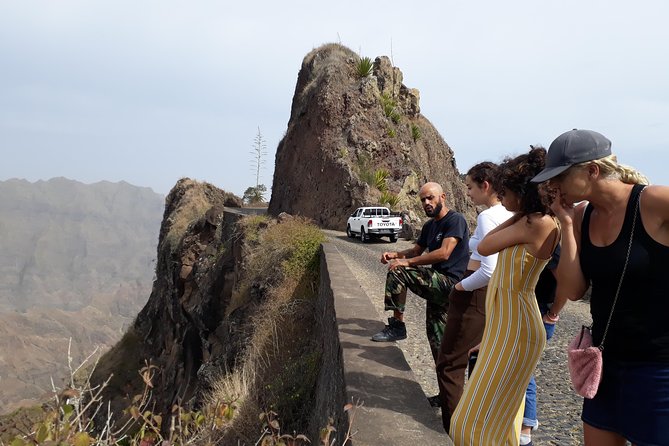
Then you hit a key photo moment at Delgadinho, a narrow mountaintop crossing that separates two major valleys, Ribeira Grande and Ribeira da Torre. It is famous for photographs, and the reason is simple: you get a natural “bridge” between viewpoints. It is also where the scale of Santo Antão really clicks, because you see how valleys fold into each other.
Consideration: the day includes driving through areas with high altitude and narrow mountain roads. If you get carsick, plan for it. If you’re comfortable with mountain driving, you’ll find this section part of the fun.
Pico da Cruz above the clouds, then into the Cova crater
Two of the most memorable viewpoint stops are built back to back.
First comes Pico da Cruz. You rise above the clouds into a cooler zone with green pine forest and eucalyptus trees. From up top, you can look toward Paúl. The air can feel noticeably different here, and that’s not just a mental trick. It’s a real altitude shift, and it helps you understand why Santo Antão can feel tropical in the valleys and misty up high.
Next is Cova Crater, a crater viewpoint that looks into a farming community. Mist from clouds is part of the setting, and it helps explain how people here can self-sustain. Even if you do not catch heavy fog, the overall mood is dramatic: steep walls, agricultural plots, and the sense that the island itself shapes the weather.
How long you stay: these are short stops, around 10 minutes each. That can feel quick if you want long photos, but it also keeps the day on schedule so you reach the lower valleys and coast before ferry time.
Ribeira Grande, Povacao lunch time, and the color of village life
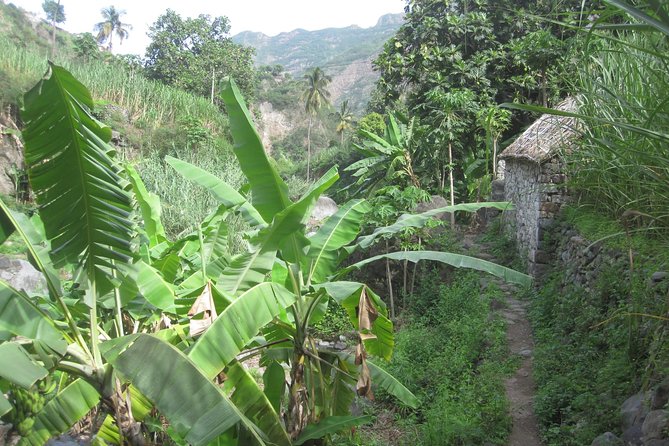
After the mountain viewpoints, the tour drops into daily life. One of the key towns on the route is Ribeira Grande, with a stop in Povacao. This is where you can see both older colonial-style buildings and newer homes, plus street art that gives the town a more modern rhythm.
You also get lunch here, with a stop lasting about 1 hour. Lunch is not included, so this is your chance to eat something local and not rush the whole experience. If you want to make your hour count, decide what you want before you sit down, and ask your guide what’s best in that moment.
Value of this stop: a viewpoint day can become a string of pullouts. Adding a town lunch breaks the rhythm and gives you time to slow down and process what you’ve seen.
Tip: bring a small snack too. Even with the hour lunch break, you may still arrive hungry, especially if your ferry morning was early.
Xôxô valley green farming and Ponta do Sol’s fishing port
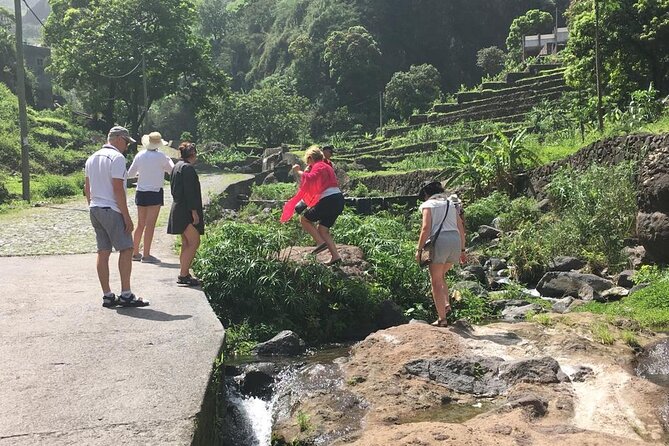
Then you go into Ribeira de Torre at Xôxô, one of the greenest and most fertile valley areas in Cabo Verde. The tour’s description includes bananas, mangos, sugar cane, and breadfruit trees, and the point is clear when you see it: farming here is not “background scenery,” it’s the main event.
There is also a big community tank pool mentioned at Xôxô that locals use for swimming and fun. If you’re there at a time when people are using it, it can feel like a candid snapshot of everyday life rather than a tourist moment.
After that, you reach Ponta do Sol, a fishing village. Here you can see the old port called Boca de Pistola (Mouth of the Pistol). The idea is to experience how fishermen arrive and to see the catch of the day.
What to expect in practice: this section is short at about 15 minutes, so focus on being present instead of trying to photograph everything. The value is the feeling of the place, not building an album.
Other walks, ridge paths and crater rims
Grogue time at Beth d’Kinha and Eito rum distilleries
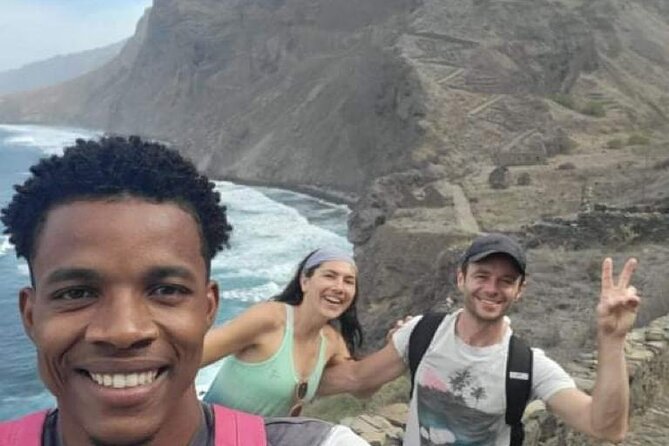
If you like local spirits, this tour does a good job rewarding that interest. There are two grogue distillery stops.
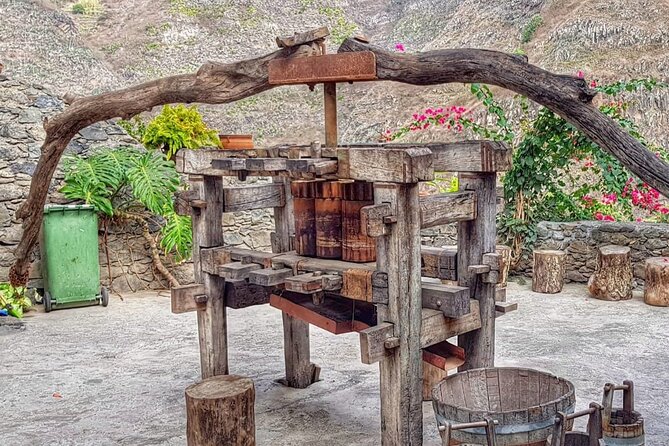
At Beth d’Kinha, the tour includes entry to the distillery and a tasting opportunity. You’ll see how grogue is produced and then you get a chance to taste the local rum. This is not a long museum-style visit, but it’s enough to connect the drink to the island process.
Later, you move to Paúl. The day includes a stop at a large Saint Anthony statue overlooking Villa das Pombas, then it continues to a rum distillery in the village of Eito, where you can also taste.
Important nuance: alcoholic beverages are listed as not included, so think of tasting as part of the distillery experience rather than an open bar. If you want to buy extra bottles, you may need to do that outside the tour.
Why I like this double-stop structure: one distillery is interesting, two makes it compare-able. You see that grogue is not just a souvenir. It is a local industry with multiple points along the island.
Return via Janela coastal road and Farol de Fontes Pereira de Melo
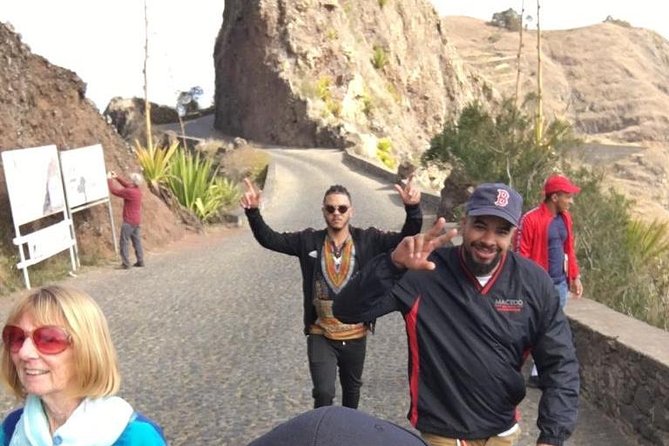
The return plan is another thoughtful piece: you do not just backtrack the same way. You travel back to Porto Novo via Janela using a new coastal road, which includes mountain tunnels. Then you can see the Farol de Fontes Pereira de Melo lighthouse.
This final portion matters because it turns the ride back into a last set of sights, instead of pure transit. It also helps you end the day with something visual, even when you’re starting to feel travel-fatigued.
Then it’s the logistics piece: you arrive at the Gare Marítima port of Porto Novo in time for the afternoon ferry to São Vicente. After you return, you get a transfer back to your accommodation in Mindelo.
Price and value: what $104.68 gets you in a one-day island jump
At $104.68 per person, this is not a budget “grab-and-go” outing. The price makes sense if you factor in three things you normally pay separately on islands.
First is the guide. You get a local professional guide with language options including English, French, Spanish, and Portuguese. A good guide makes Santo Antão more than scenic stops, because they explain how people use the terrain and why the island looks the way it does.
Second is transportation on the island, including private transportation and pickup and drop-off from your starting point. Santo Antão’s roads are not built for hopping on local buses between viewpoints.
Third is the ferry piece if you start from São Vicente: roundtrip ferry tickets are included in that option. That alone changes the value math, because the ferry is often the hardest part to self-plan if you have limited time.
You still need to budget for lunch and any extra drinks. Entrance is included for the rum distillery, but meals are not part of the package. If you plan a snack or a simple lunch, the rest of the day stays great value because you are not constantly paying for add-ons.
Pace and practicality: how “trekking” this day really is
The tour is built around a car route with optional walking, hiking, or trekking-style choices. In practice, you should treat this as a viewpoint and village day with short stretches to walk around at stops. The stops at Pico da Cruz, Cova Crater, Delgadinho, and the town areas are short windows designed to keep the ferry schedule safe.
If you want a true, long hike, you might find this day trip not deep enough for that. If you want fresh air, easy-to-moderate walking at viewpoints, and a route that hits multiple regions in one day, it fits well.
You should also plan for altitude roads. Even if you are not walking much, you are still on mountain terrain for hours. It’s a day trip that rewards good shoes and a flexible attitude.
On the plus side, you can request stops for photos, and many people specifically praised that ability in the experience feedback. That means if you want a few minutes more for a shot at a viewpoint, it’s more likely to happen than on a super rigid tour.
Who should book this Santo Antão car day, and who should skip it
Book it if:
- You have limited time in Cape Verde and want a structured Santo Antão introduction
- You care about seeing both mountain valleys and fishing villages in one day
- You want local culture with a guide, not just a self-drive route
- You enjoy grogue and want an included distillery visit
Skip it if:
- You want an always-private tour for a small party and cannot tolerate sharing the day with up to 12 people
- You hate early mornings, because ferry timing means starting bright and early
- You are looking for a full-on trekking itinerary with long hikes, not short walking moments
Should you book this Santo Antão day trip?
My take: if your goal is to experience Santo Antão’s “island of mountains” feeling without losing a whole day to logistics, this is a strong buy. The combination of ferry, mountain viewpoints, a real town lunch stop, and included grogue distillery access makes it feel complete for a day trip.
The main tradeoff is the pace. You are on the move for most of the day, and mountain roads plus altitude can be tiring. If you’re okay with that, you’ll come away with plenty to remember: crater farms, cloud-top views, valley greens, and fishing port life.
If you do book, do one smart thing: confirm your language comfort and whether you’re joining an open group. Then pack water, plan for lunch on your own, and give yourself permission to enjoy the ride, not just the photos.
FAQ
How long is the Santo Antão day trip?
The duration is listed as about 7 to 11 hours.
Where does the tour start?
You can start from São Vicente (with transfers in Mindelo and ferry tickets included), or you can start on Santo Antão (with ferry tickets excluded, and harbor transfers in Mindelo still arranged).
What is included in the price?
Included items are private transportation, a local professional guide, pickup and drop-off at the starting point, and distillery admission for grogue. Ferry tickets are included only for the option that begins in São Vicente.
Is lunch included?
No. Lunch is not included, though there is a stop in Ribeira Grande for about 1 hour.
Are alcohol tastings included?
The tour includes entrance to the grogue distilleries and includes tasting opportunities in the itinerary. Alcoholic beverages are listed as not included.
Do I need trekking experience?
Most travelers can participate. The day includes options for a walk, hike, or trek, but the schedule is also built around short stops and driving between key points.
How many people are in the group?
The tour has a maximum of 12 travelers.
Can I cancel for free?
Yes. You can cancel up to 24 hours in advance for a full refund.
What languages are guides available in?
Guides can be English, French, Spanish, or Portuguese.
Hikes and Treks on the Islands

All Our Cape Verde Reviews



More Cape Verde tours from the same review pile
- Hike Monte Verde, Natural Park, São Vicente, 3h +/- (roundtrip)
★ 4.5 · 4 reviews - São Vicente: Half day, Beaches, Villages, Monte Verde
★ 5.0 · 5 reviews - Sunset Hike to Lighthouse, Dona Amélia, São Vicente, 2h
★ 5.0 · 8 reviews - Volunteering with animals in Sao Vicente!
★ 5.0 · 9 reviews - City Walking Tour, Mindelo, Highlights
★ 5.0 · 12 reviews - Beaches, Villages and Monte Verde, São Vicente Excludes City
★ 5.0 · 13 reviews
Santo Antão Day Trips, compared.
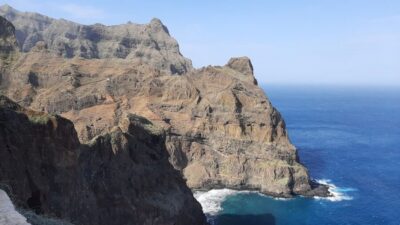 ★ 4.7From São Vicente: Santo Antão Day Trip with Local GuideFrom $147101 reviews
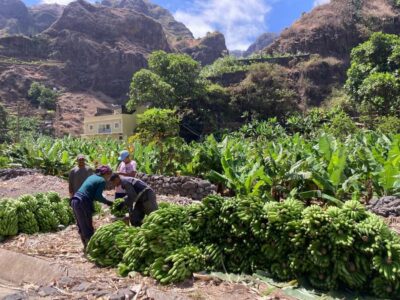 ★ 4.8Santo Antão Highlights: Day Trip by Car with Ferry from SVFrom $13584 reviews
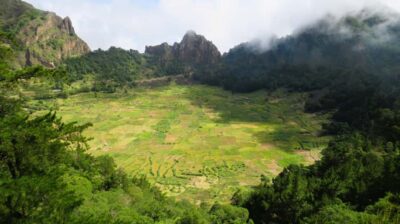 ★ 4.8Santo Antão: Full Day Island Tour & Visit to Cova de PaúlFrom $10654 reviews
 ★ 4.5Santo Antão: Hiking Cova Volcano Crater to Ribeira PaúlFrom $10031 reviews
 ★ 4.5Full-Day Island Tour in Santo Antão with Lunch IncludedFrom $11814 reviews
 ★ 4.8Santo Antão: Ponta do Sol & Fontainhas Guided Trip with HikeFrom $919 reviews
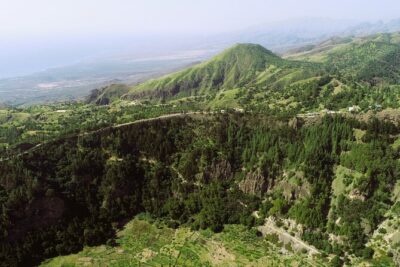 ★ 5.0Santo Antão: Trekking Cova de Paúl Volcano Crater – Ribeira de PaúlFrom $998 reviews
 ★ 5.0Santo Antão: Full-day Island Tour & Visit to Cova de Paúl Volcano CraterFrom $1067 reviews
Browse the lists this tour appears in